DRM in Hungary – Part of Radio Centenary Celebrations
Home / Recent News / DRM in Hungary – Part of Radio Centenary Celebrations
Although digital radio transmissions are not at the top of the agenda in Hungary, this silence was broken in the last month of 2025. On the 1st of December 2025, 100 years of regular broadcasting in the country were celebrated. DRM was mentioned in articles aimed at both the professional community and the wider public.
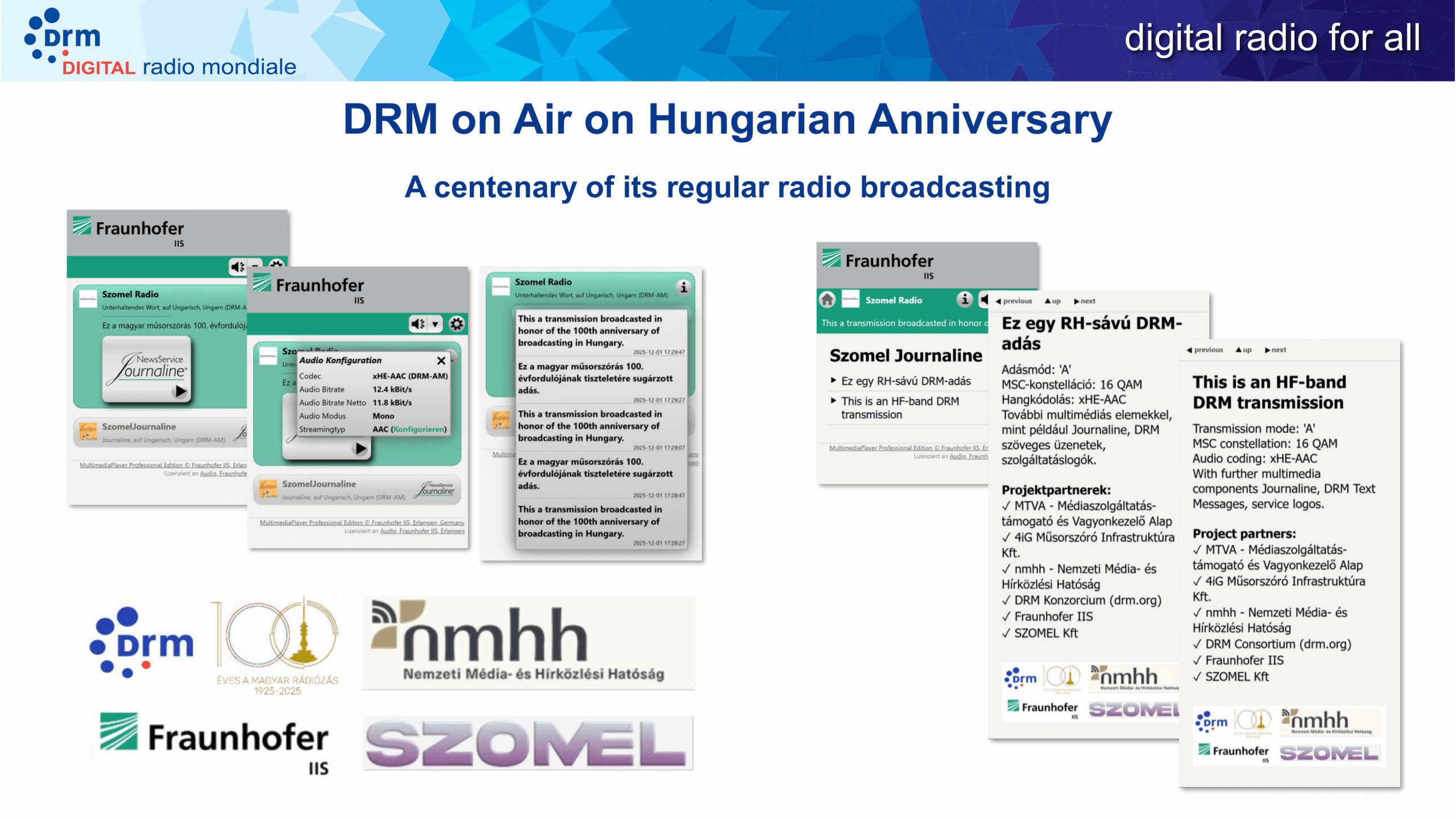
December 1st, 1925 marks the moment when regular broadcasting backed by appropriate legislation officially started. Previously, occasional AM transmissions took place. To honour this, a DRM transmission was launched on 26060 kHz for 1 day only and its output power was exactly 100 W like 100 years ago. Just like 6 years ago, when a demonstration of DRM programme covered Budapest and its surroundings twice during six months, this 2025 project was the result of a collaboration between Fraunhofer IIS, as they provided the data stream, 4iG Infrastruktúra Kft. (former Antenna Hungária, and the Hungarian national broadcasting company) who “lent” the broadcasting site for this purpose, the National Media and Infocommunications Authority of Hungary as they issued the related radio licence, and SZOMEL Kft., Associate Member of the DRM Consortium, who provided the transmission technology and organised the background work.
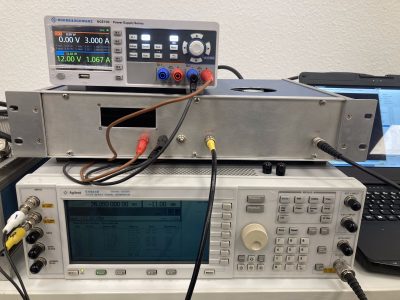
SZOMEL Kft’s custom-built transmission setup, before the official start
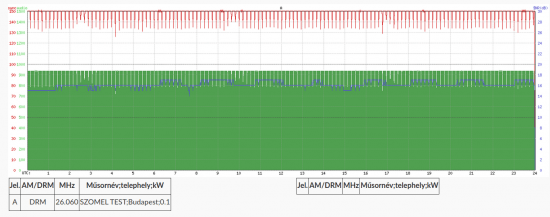
The Jubilee DRM transmission as monitored by the DRM Monitoring Station at the National Media and Infocommunications Authority of Hungary
During the 24-hour transmission the test vehicle of SZOMEL Kft. registered during driving field strength data not only in Budapest, but also in the surroundings of the capital within an approximate radius of 50 km. University students also performed additional tests in the subway of Budapest. These coverage measurements were orchestrated by Mr. Ádám Kiss, external contributor of SZOMEL Kft and a young researcher at the University of Szeged. The results of all these measurements are just being evaluated, related publications can be expected in Q1 of 2026.
In addition to the real-life transmissions detailed above, the Radio and TV Museum of Diósd (Hungary) opened a 10-year permanent exhibition on the evolution of broadcasting in Hungary. SZOMEL Kft. installed analogue TV, DVB-C and DRM transmission and measuring technology for this, displaying instruments in operation with real-life signals. The DRM installation is a small custom-built transmitter station emitting an AM-band DRM signal with music and short textual data in its stream. The transmission is directly monitored and its main parameters (spectrum, FAC/SDC/MSC constellation, etc.) are displayed right above the transmitter, while the programme can be listened to on portable radios, along with viewing the additional data on the receiver screen.
Reception Reports
The transmission was very well received, with reception reports arriving from far afield, such as Guipavas in north-western France.