
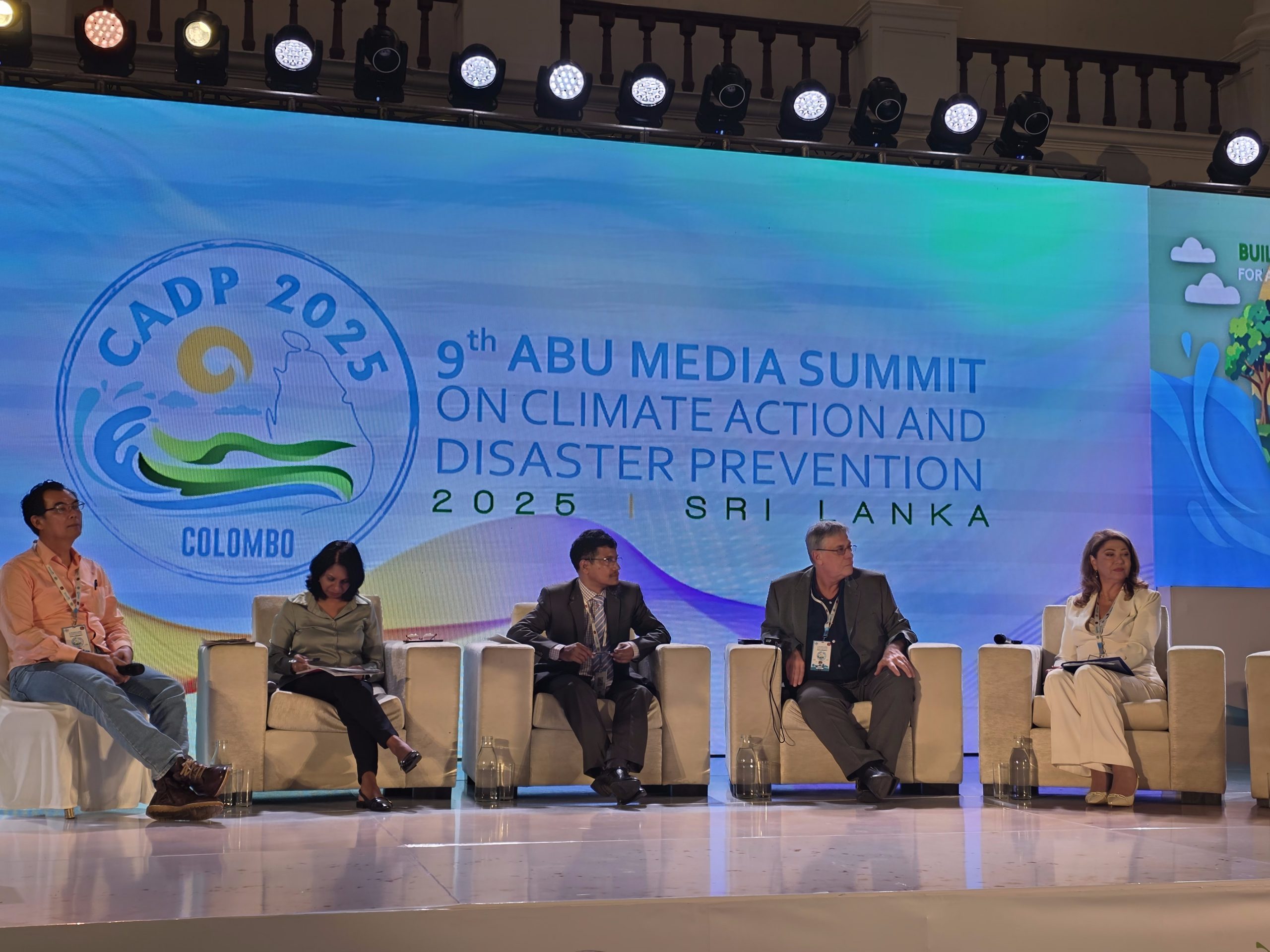
As recently seen in Sri Lanka, Indonesia and Hong Kong, climate-related and man-made disasters in the Asia-Pacific region are growing in frequency and intensity, threatening lives, infrastructure, and sustainable development. The critical need for enhanced collaboration between media personnel and key stakeholders to safeguard communities through effective early warning systems, disaster response, and post-disaster recovery was a central theme at the recent Asia-Pacific Broadcasting Union’s (ABU) Media Summit on Climate Action and Disaster Prevention held in Colombo, Sri Lanka (November 25-27). The 2025 edition of this event had the theme “Building Resilience Through Media: For a Cleaner, Greener, and Safer Tomorrow” and was hosted by Sri Lanka Rupavahini Corporation (SLRC).
Leading experts from organizations including UNESCO, UNDRR (United Nations Office for Disaster Risk Reduction), and BBC Media Action, alongside media specialists, engaged in extensive discussions on actionable strategies to save lives.
As the Digital Radio Mondiale (DRM) standard has a wide recognition and use in the Asia-Pacific region, the Emergency Warning Functionality (EWF) of DRM was featured during this ABU-UNESCO event. Matthew Phillips, a senior member of the DRM Steering Board, participated in one of the key sessions of the Summit. He spoke about how radio, digital radio DRM, can enhance the role of communication in early warning dissemination and emergency response to save lives and reduce disaster impacts. Mr Phillips stressed that in times of disaster it is incorrect to imagine things will be business as usual and that our ‘normal situation’ infrastructure is enough. He explained that DRM has the unique capacity to disseminate information on the disaster effectively from safe locations, out of affected area, and do it while using familiar simple and low-cost devices. The DRM Consortium believes that radio broadcasting remains a trusted media source in many places, much more than the internet. Using this fact, along with supplying data-rich, multi-lingual, and complete information as enabled by DRM, gives broadcasters a unique role in giving all life-saving warnings that are reliable, timely, and clearly understood by all audiences.
A significant outcome of the Summit was the launch of new resources dedicated to bolstering media capacity. UNESCO and UNDRR unveiled online training tools designed to empower journalists and broadcasters to better educate and prepare their audiences for climate-related emergencies.
Another highlight included insightful presentations from broadcasters demonstrating innovative ways to reach younger audiences.
The overarching consensus was clear: a unified approach, bridging the gap between scientific authorities, disaster management experts, and media communicators, is essential for building resilient communities across the Asia-Pacific.
Next year the 10th edition will be held in Bhutan.
