
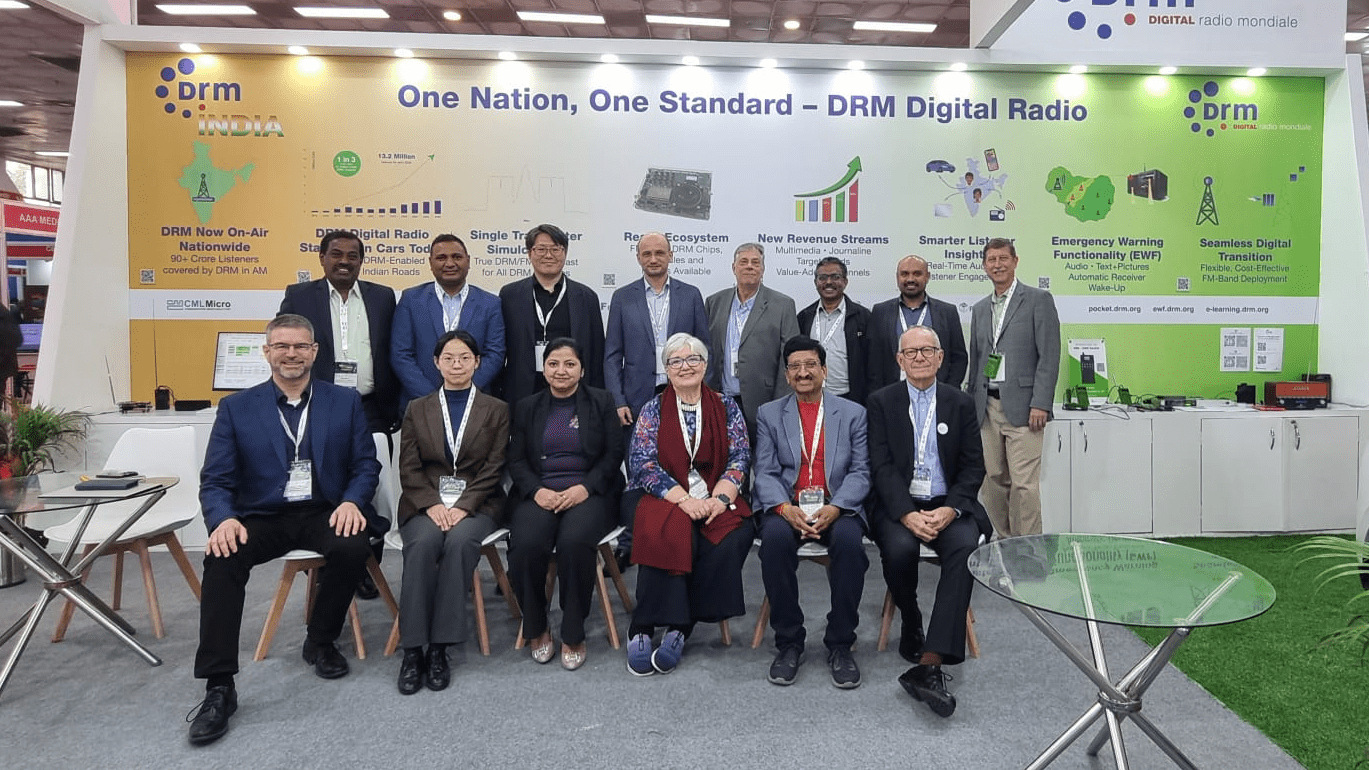
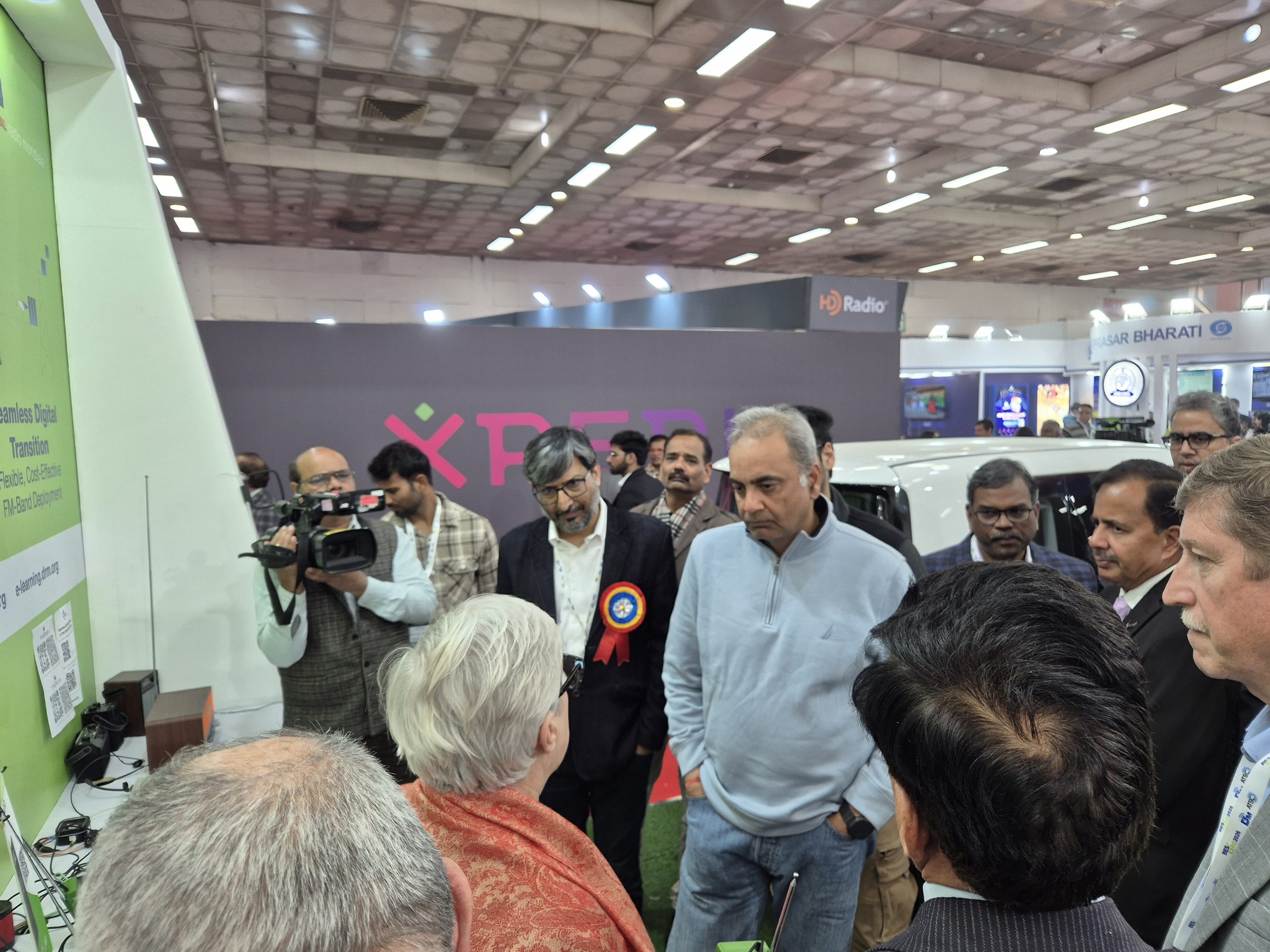
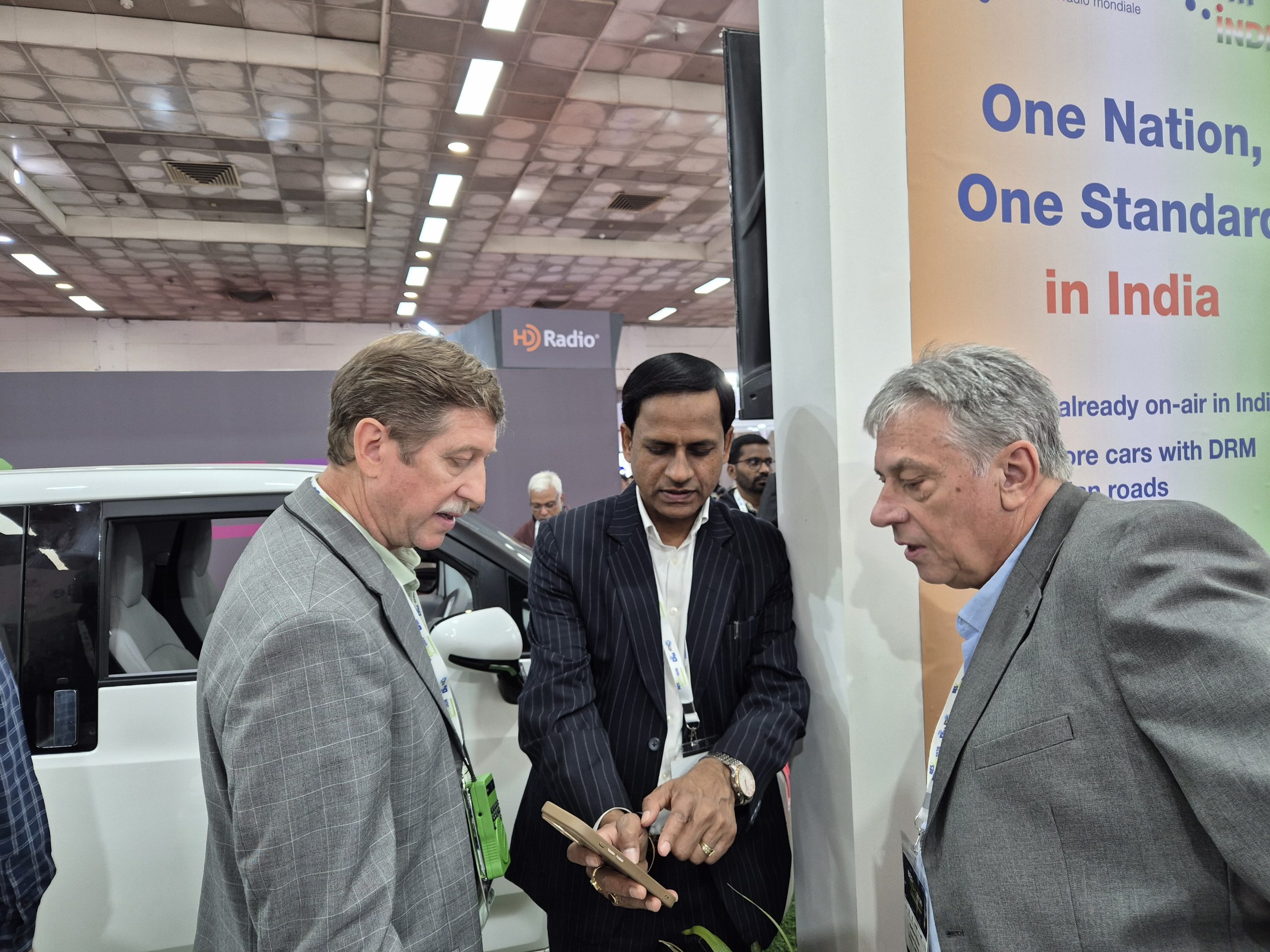
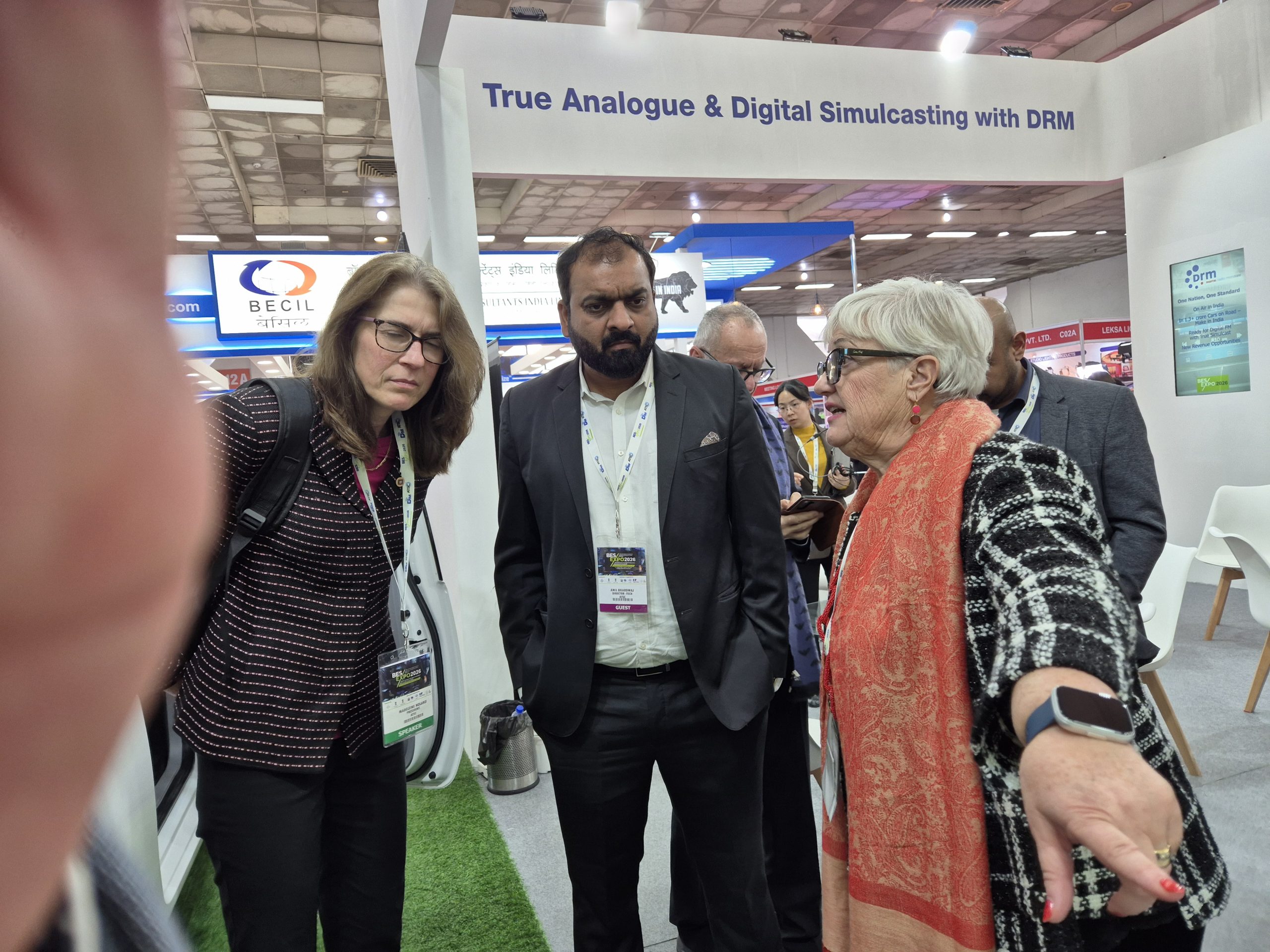
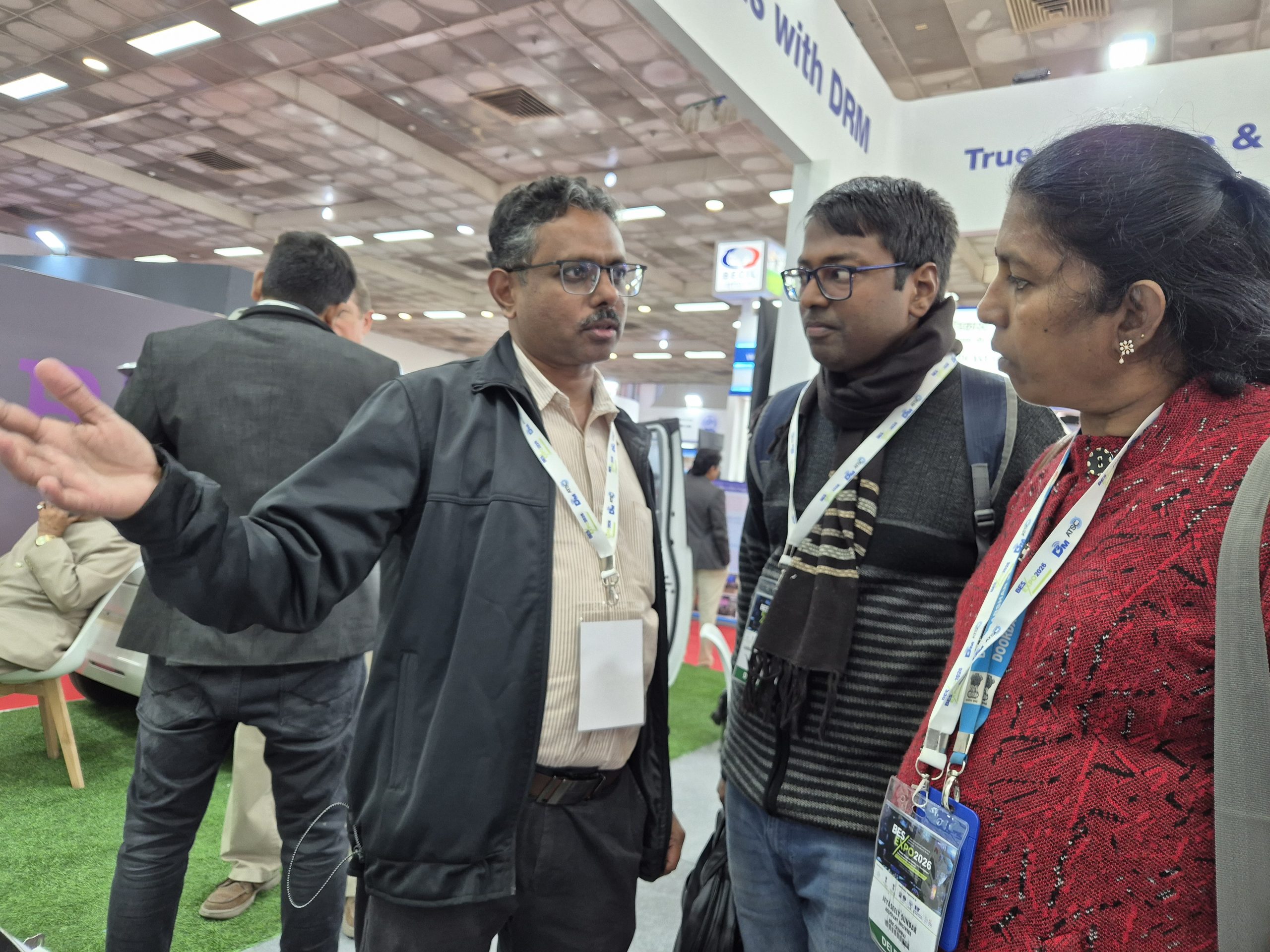
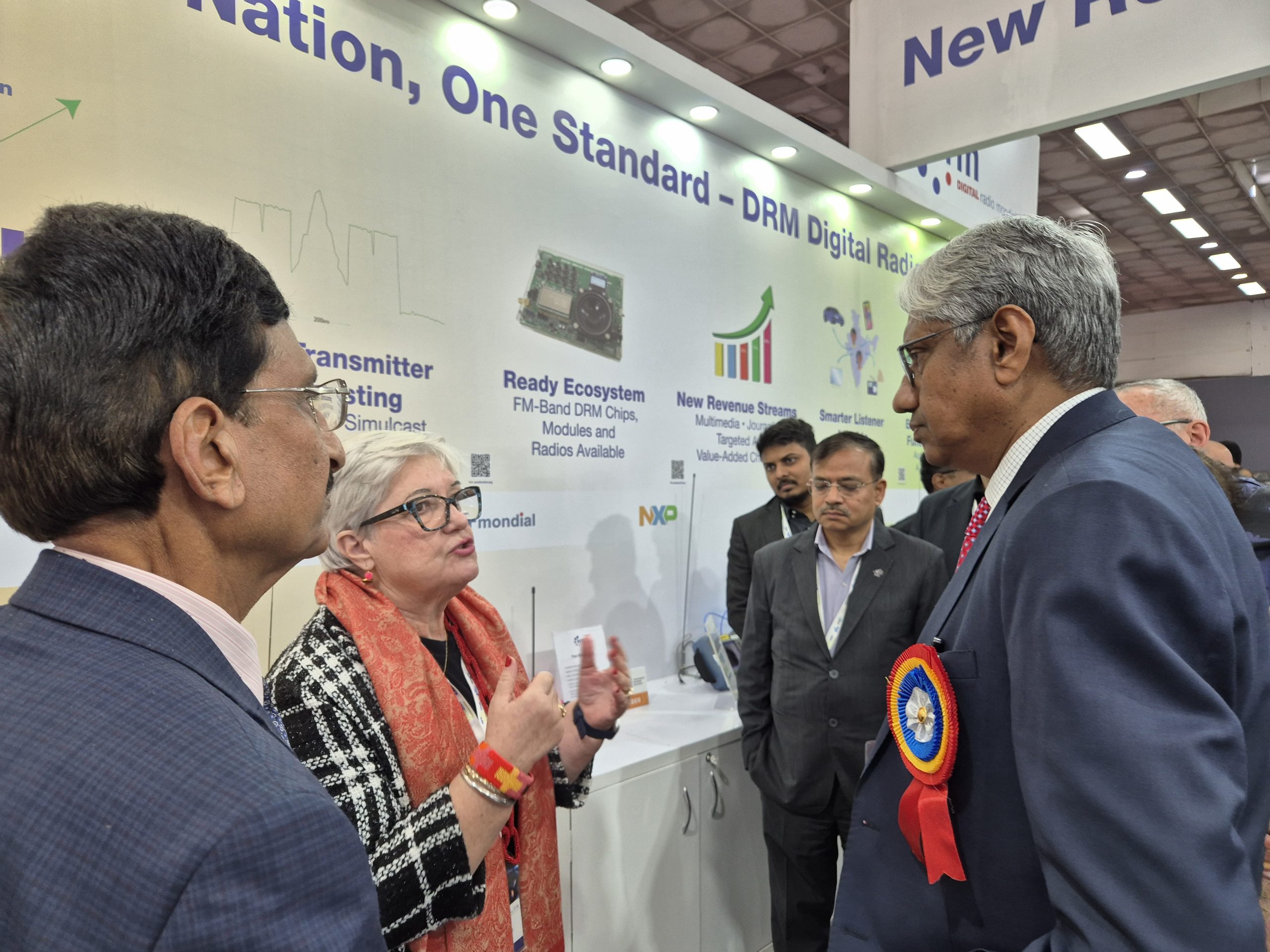
Under the title DRM Digital Radio – “One Nation, One Standard” India’s industry from chipset design via low-cost handhelds to automotive receivers and the Digital Radio Mondiale (DRM) Consortium showcased DRM’s broadcast-proven capabilities and on-the-road readiness fitting perfectly the needs of India at the 30th BES International Conference & Exhibition on Broadcast & Media Technology, held 29–31 January 2026 in New Delhi. “Make in India for the World” aligned with DRM’s mission to enable modern, efficient radio services fitting perfectly India’s scale and diversity.
At BES Expo 2026, DRM experts demonstrated how the only open digital radio standard for all frequency bands offers the most flexible and cost-effective path for FM radio digitisation in the country, on which a decision is still expected from the Indian government.
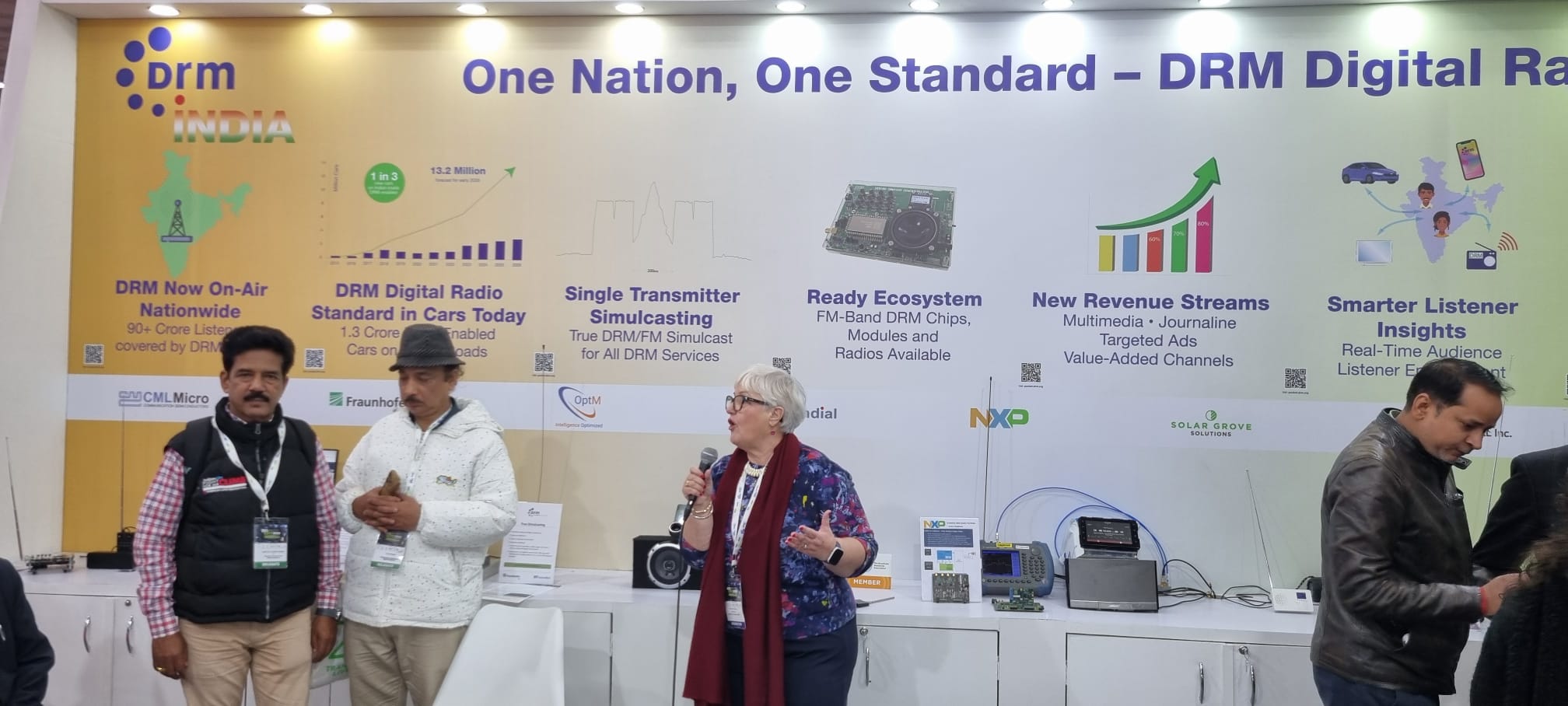
In the conference session, the special event held on January 30th, in presentations to ministers and Vice-Minister of Information and Broadcasting, to the CEO Prasar Bharati, senior public and private broadcasters, community leaders, manufacturers, distributors, academic representatives the strong DRM team reminded everyone that DRM is the open standard solution, with full technology access and no trade secrets. Thus ensuring full Technology Sovereignty for India’s radio infrastructure and industry.
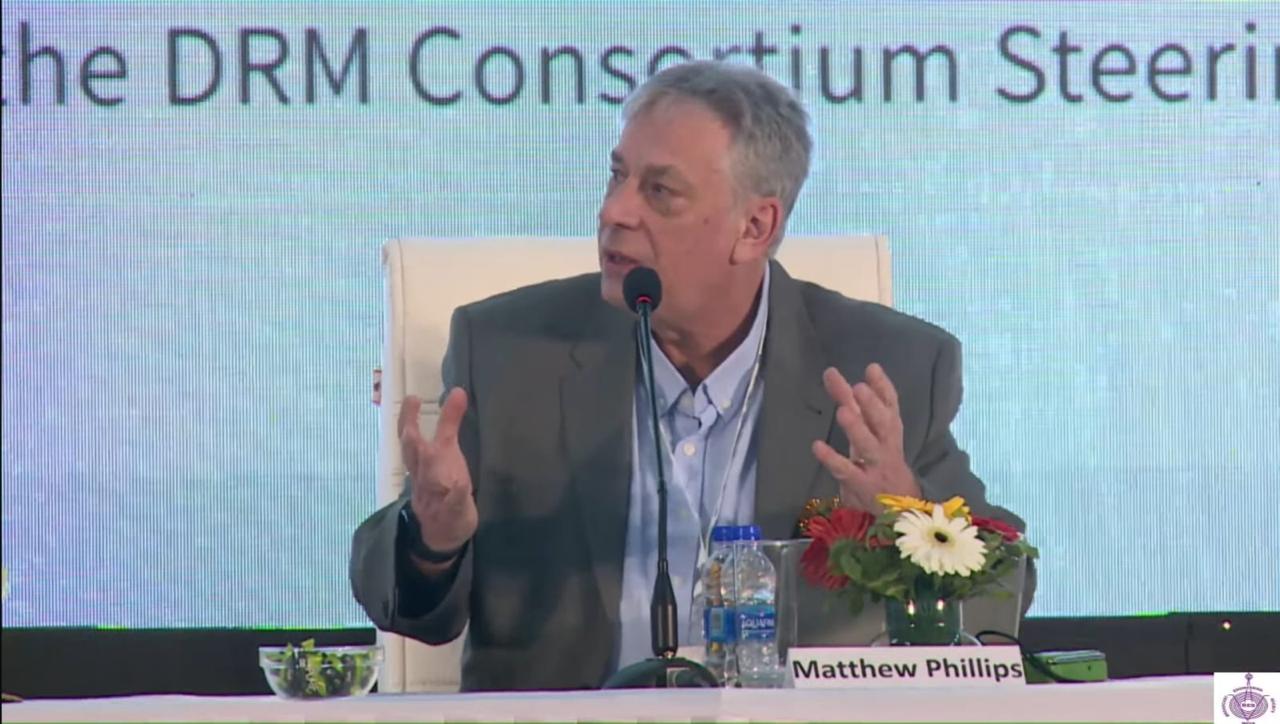
DRM services are widely rolled-out today in India. Its extension to digitise FM band radio is in line with Indian government’s policies of Make in India and Innovate in India. Moreover, unlike any other radio broadcast technology, DRM is already serving up to 900 million listeners and is present in 13 million cars on India’s roads. As the newest digital broadcast technology, DRM ensures full simulcast between each digital DRM service and their analogue FM/AM alternatives delivering spectrum flexibility, power efficiency and maximizing FM band capacity. At BES, Demonstrations Showed DRM is Already Proven in India – and Ready to Scale.
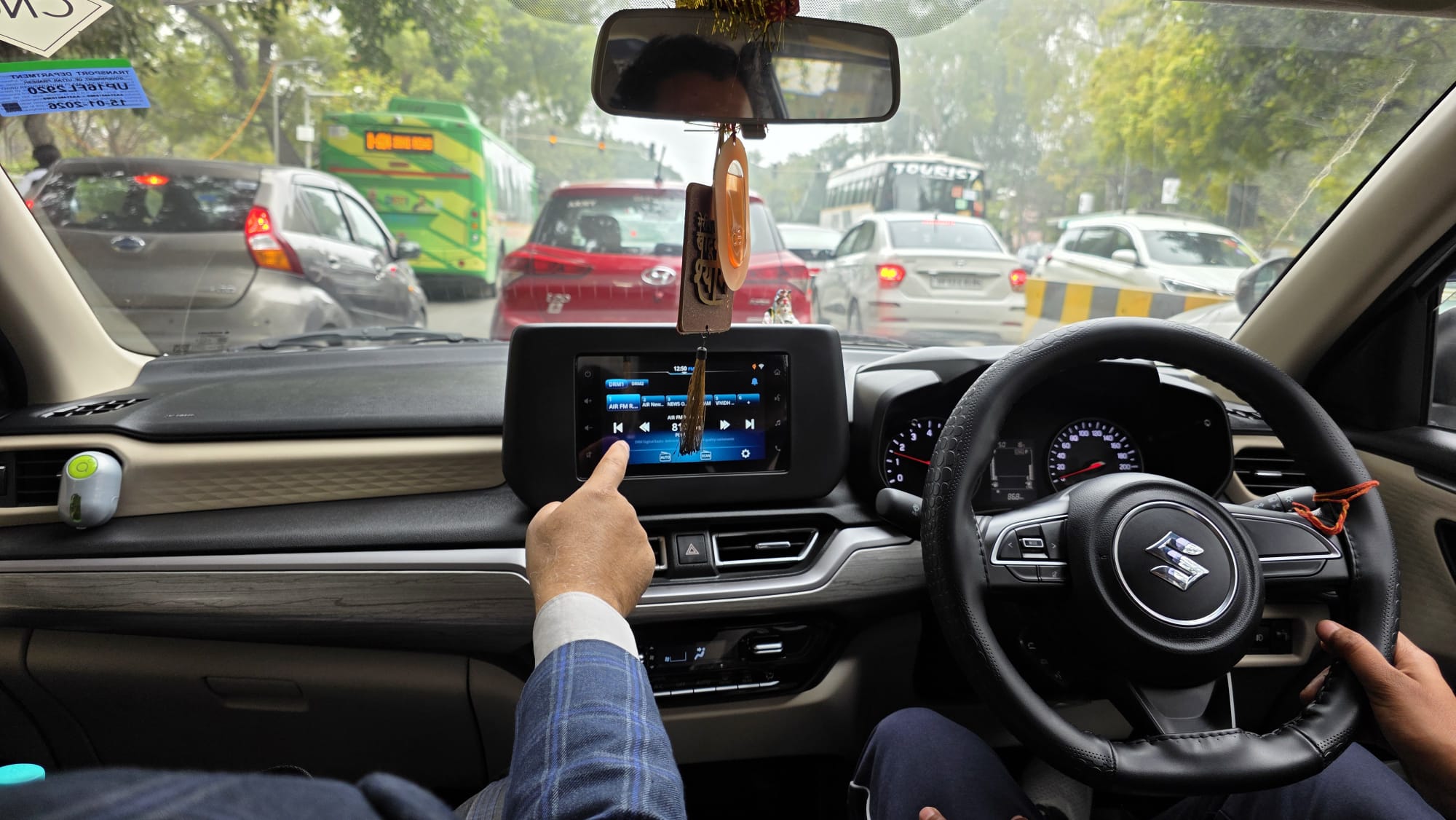
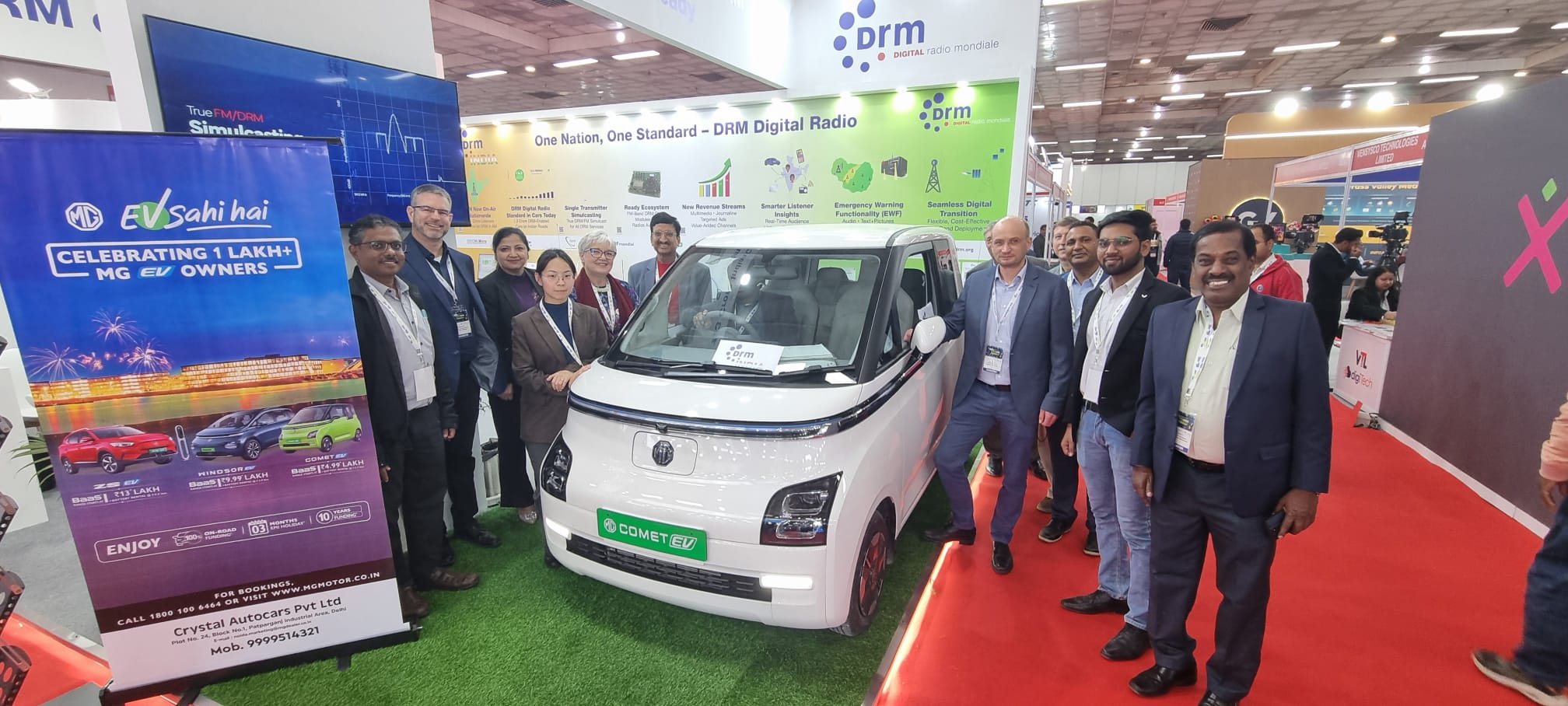
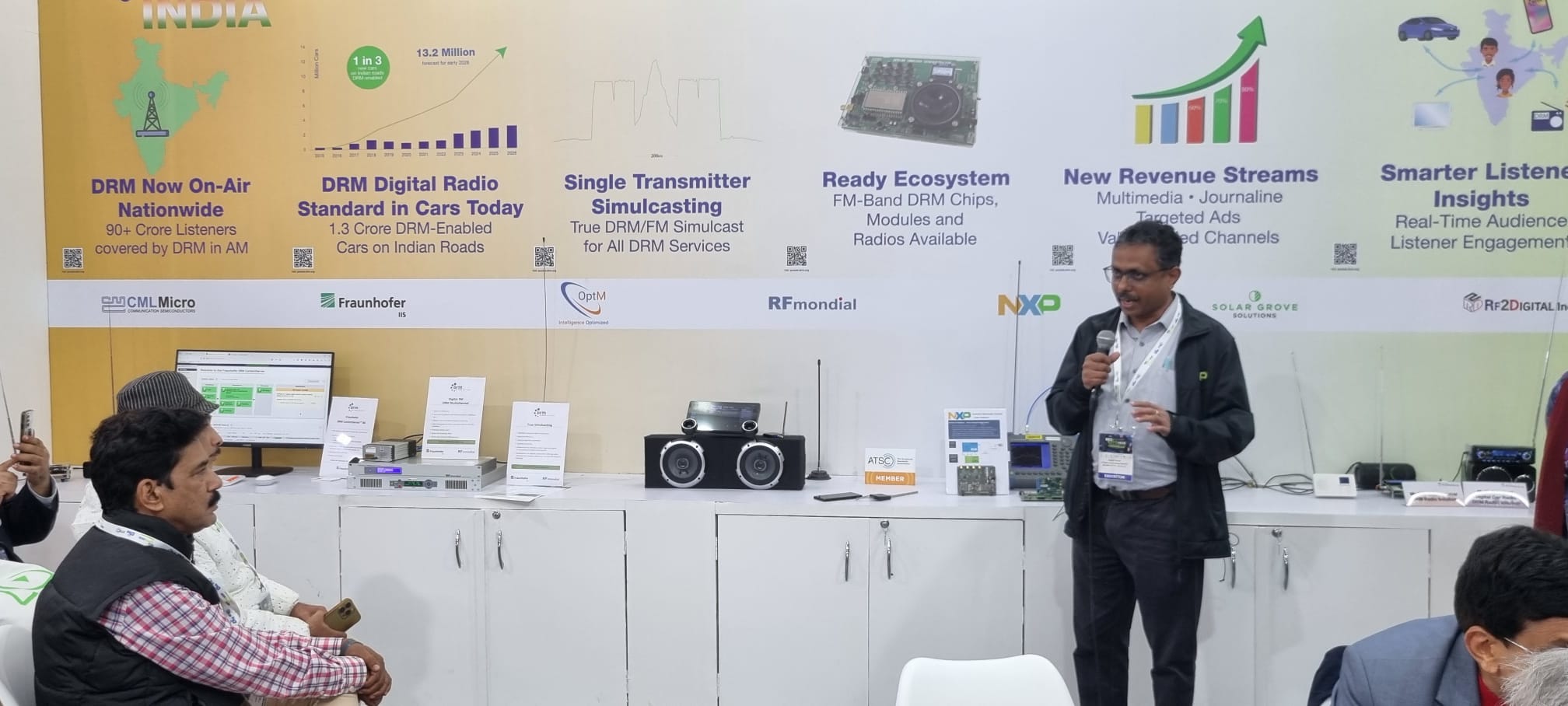
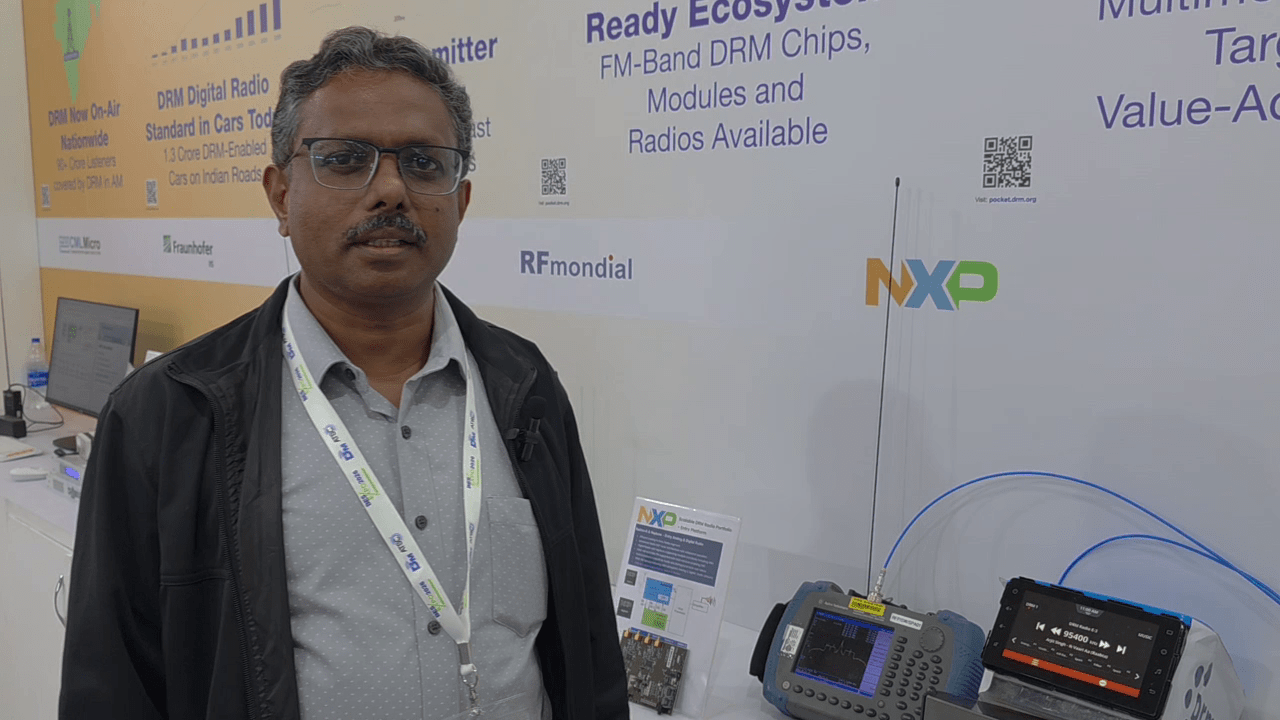
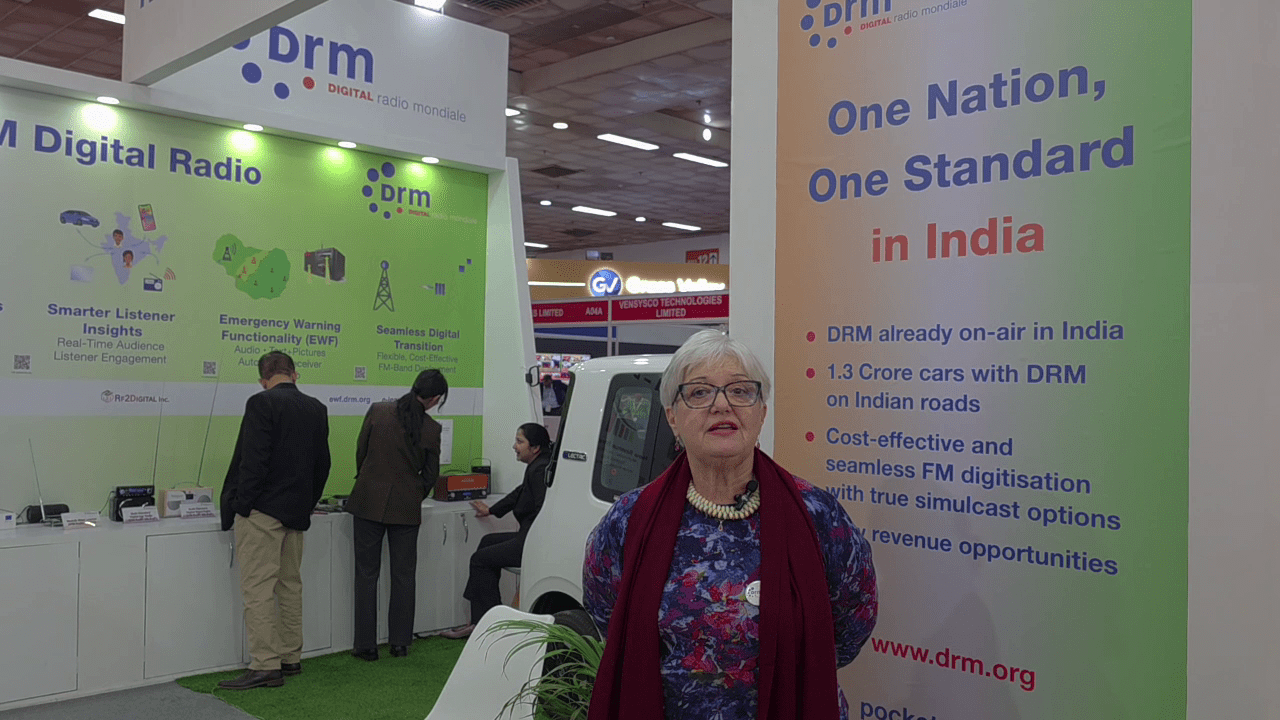
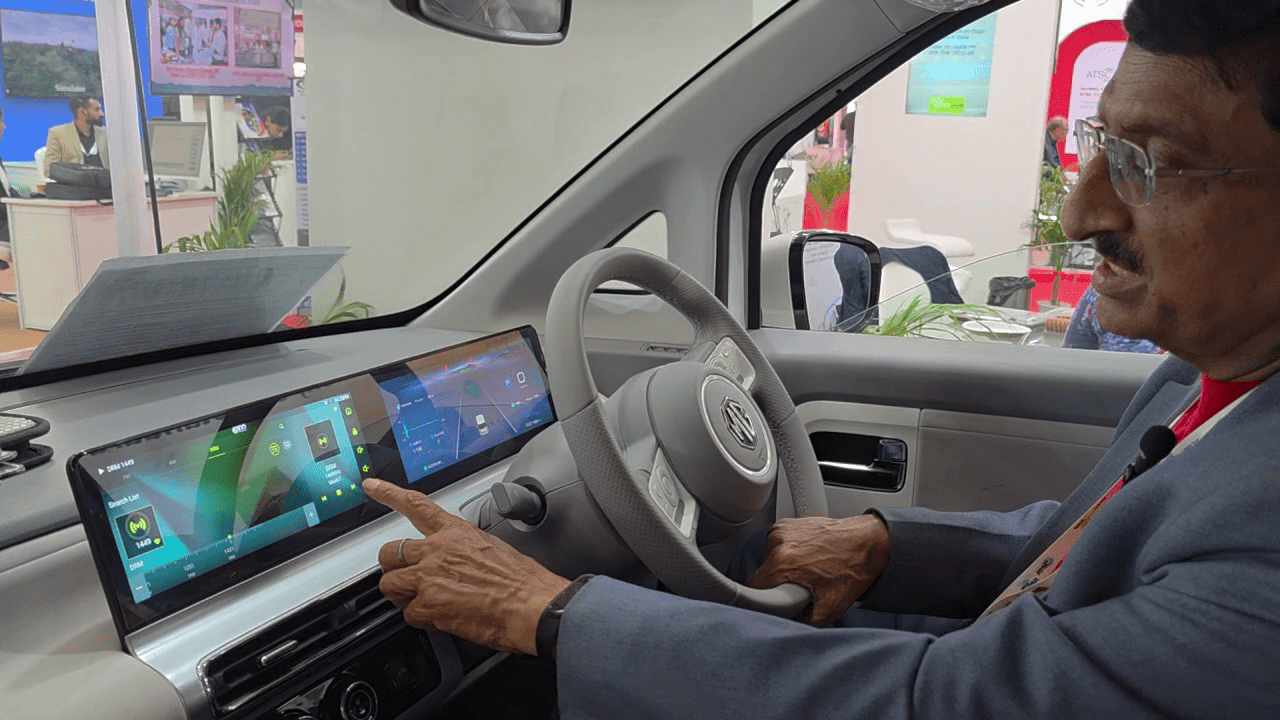
At its impressive BES booth, Indian and foreign companies manufacturing DRM receivers or chipset and modules for car, phones and standalone receivers demonstrated the quality of their products (CML, Fraunhofer IIS, NXP, OptM, RFmondial, RF2Digital, Solar Grove Solutions, Starwaves). The momentum in the Indian development of global DRM is further reflected in the automotive market: around 30% of new cars sold in India are DRM-enabled, and industry estimates indicate there are approximately 1.3 crore DRM-capable vehicles currently on Indian roads. An electric MG car with DRM receiver as a line-fit feature was parked at the DRM booth and visitors could sample the excellent quality of the DRM Broadcast sound received from a live AIR transmission.
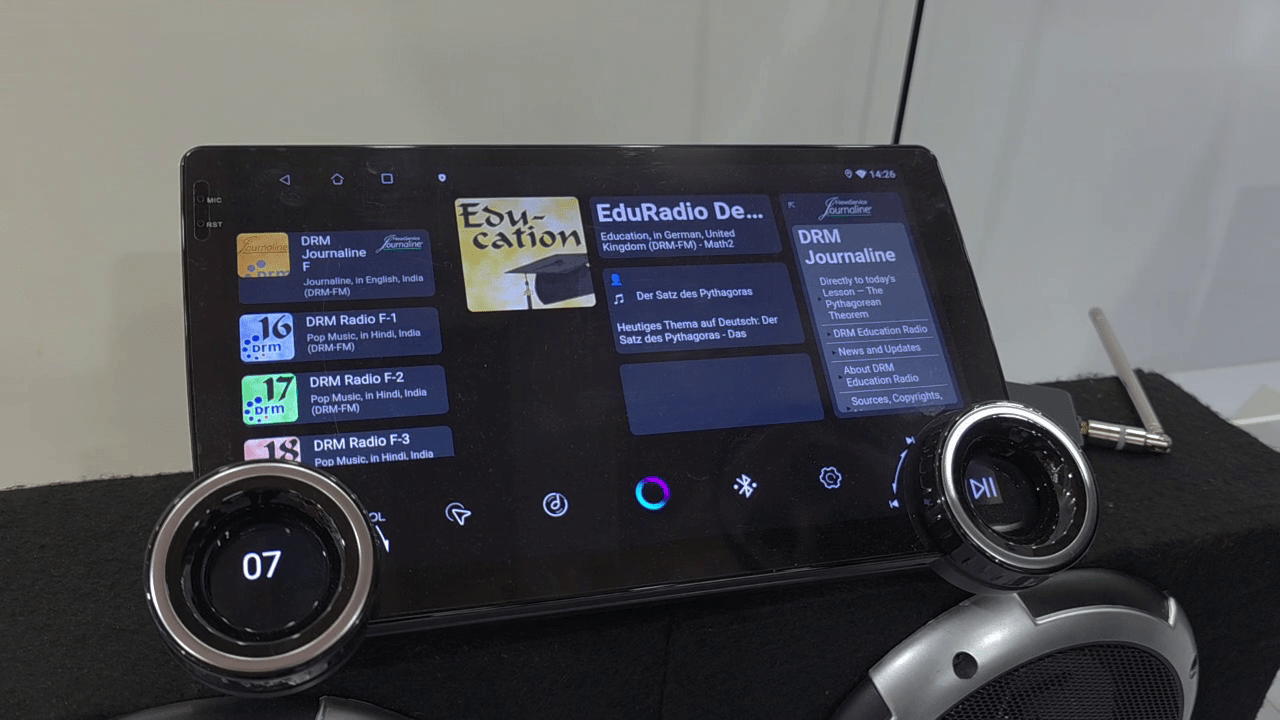
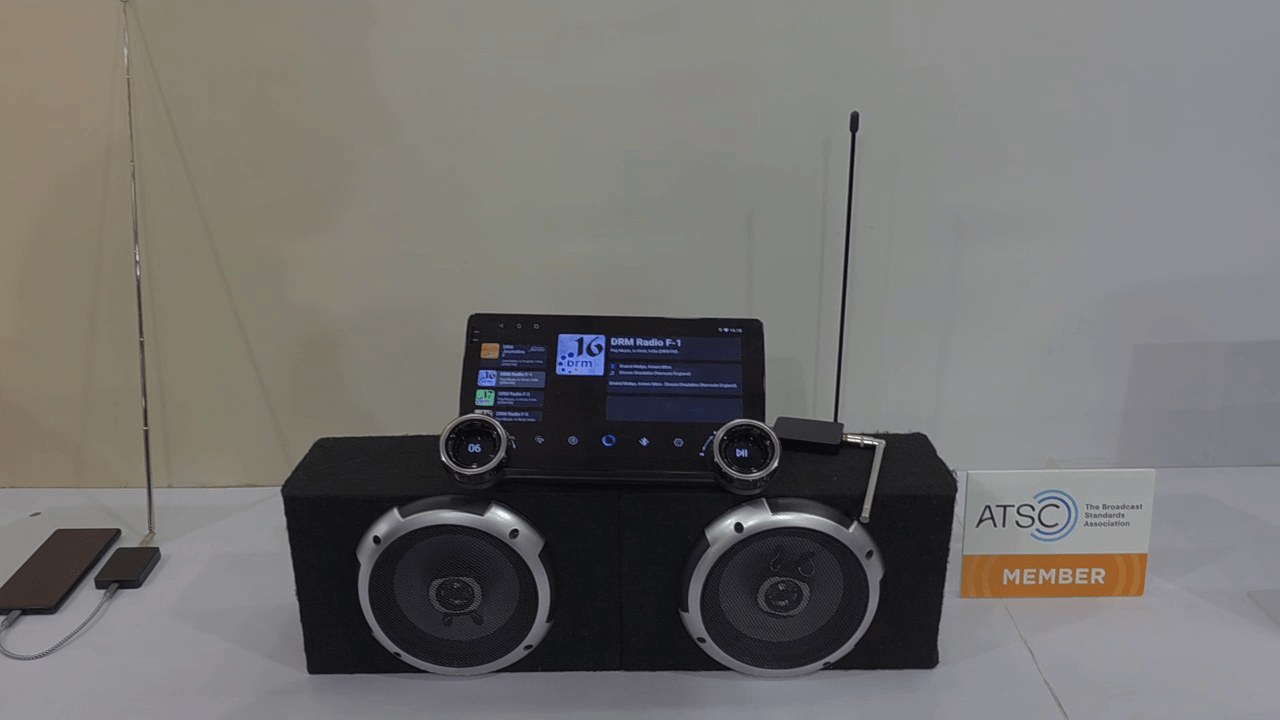
Fraunhofer IIS, based on the simple to install after-market “DRM MultimediaPlayer Radio App” solution, proved how easy it is to upgrade any of the widely popular Android-based car radio, already in the dashboard of many Indian cars, to full DRM reception. This includes not only support for DRM FM band services but also core DRM features such as convenient service selection by station label and logo, DRM’s interactive Journaline advanced text application and DRM EWF – Emergency Warning Functionality.
True Simulcasting: Protecting Today’s Analogue FM While Enabling Tomorrow’s Digital FM
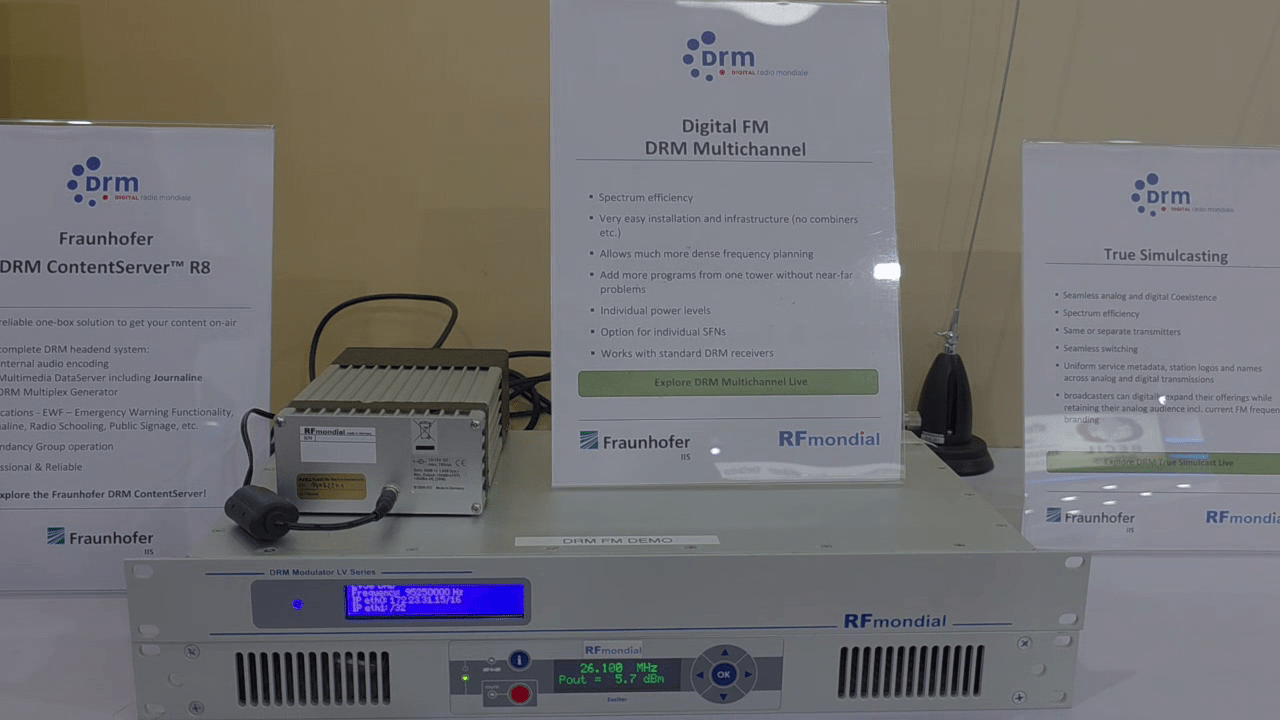
A key focus of the presentations at BES Expo 2026 was the practical transition strategies offered by DRM. DRM showcased its True Simulcasting architecture, in which the analogue FM programme is transmitted in parallel with the DRM digital service, ensuring service continuity for legacy receivers while enabling digital upgrades. The DRM transmission can additionally carry enhanced digital services – such as interactive Journaline text with embedded images and other data applications – alongside the audio. DRM specialists also highlighted the excellent results of the past DRM VHF/FM-band trials and demonstrations that inform a feasible roadmap for FM digitisation.
“Make in India, Innovate in India”: Receiver Ecosystem and Modules
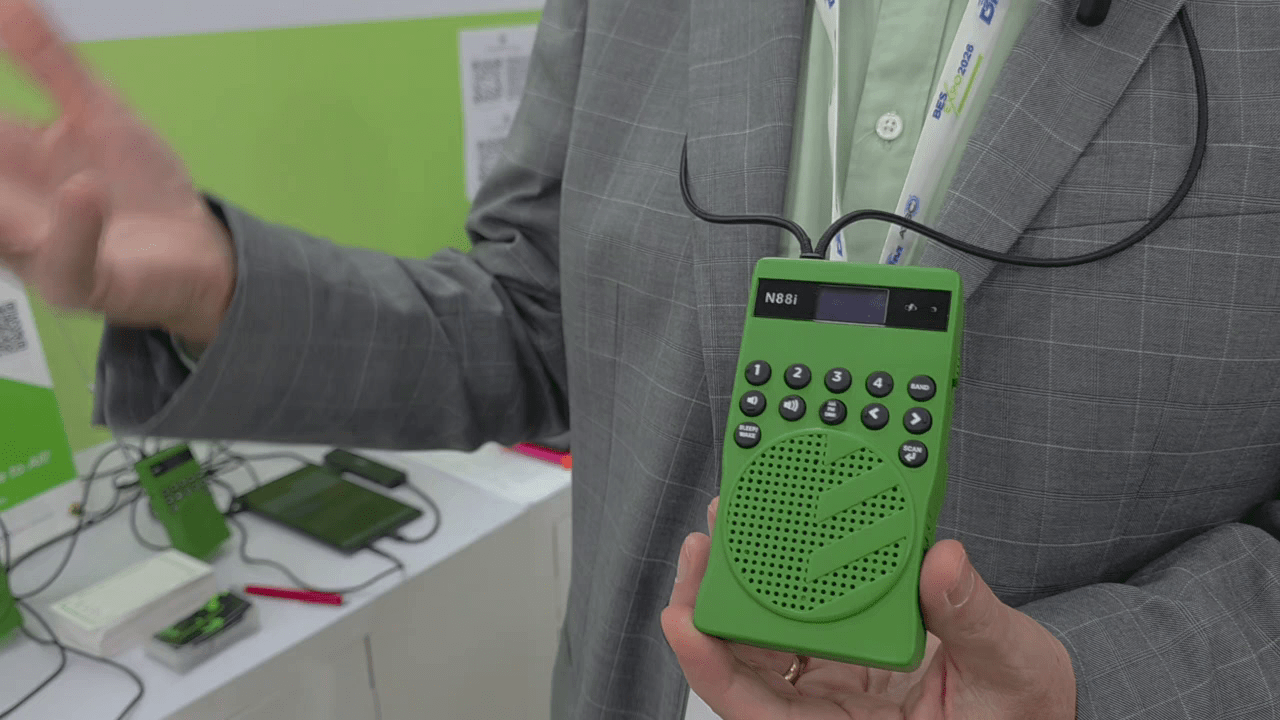
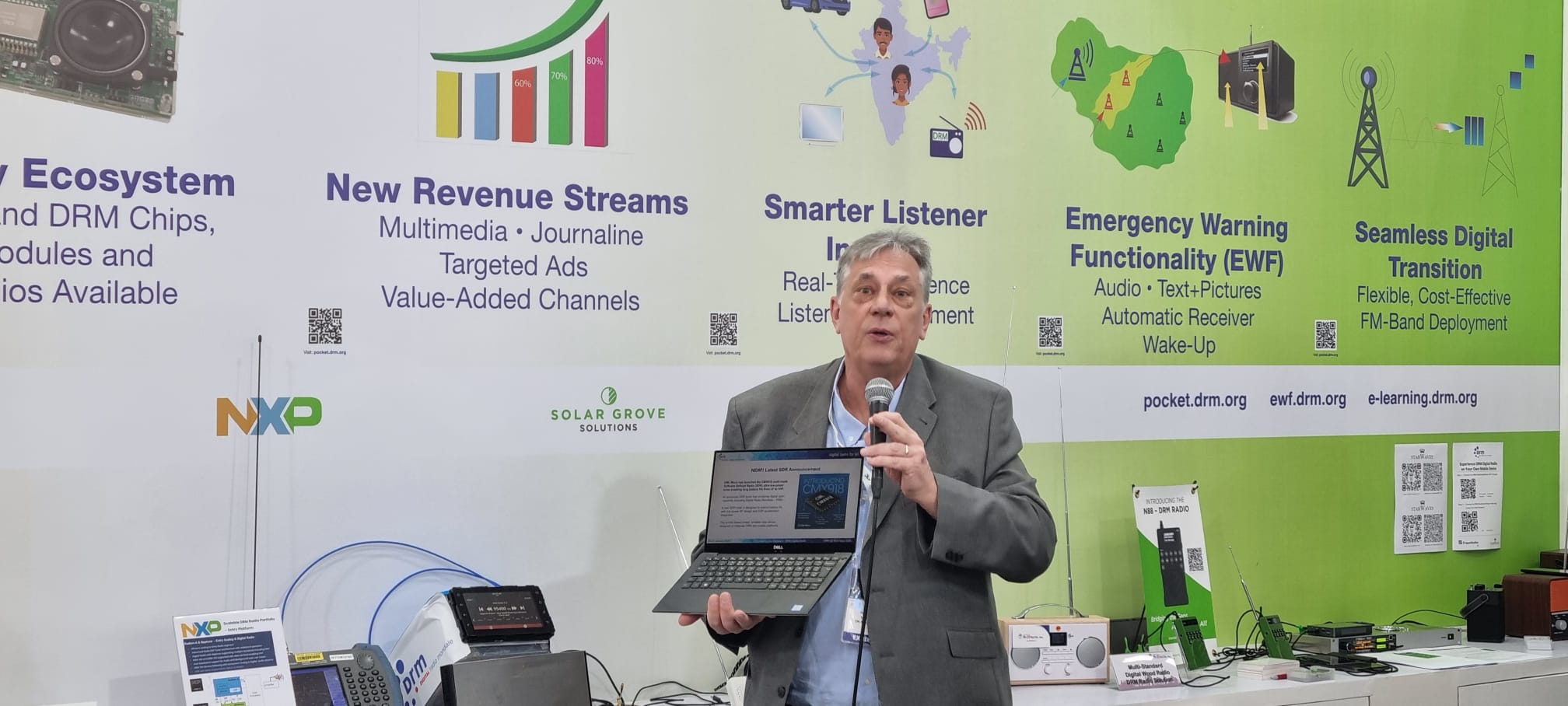
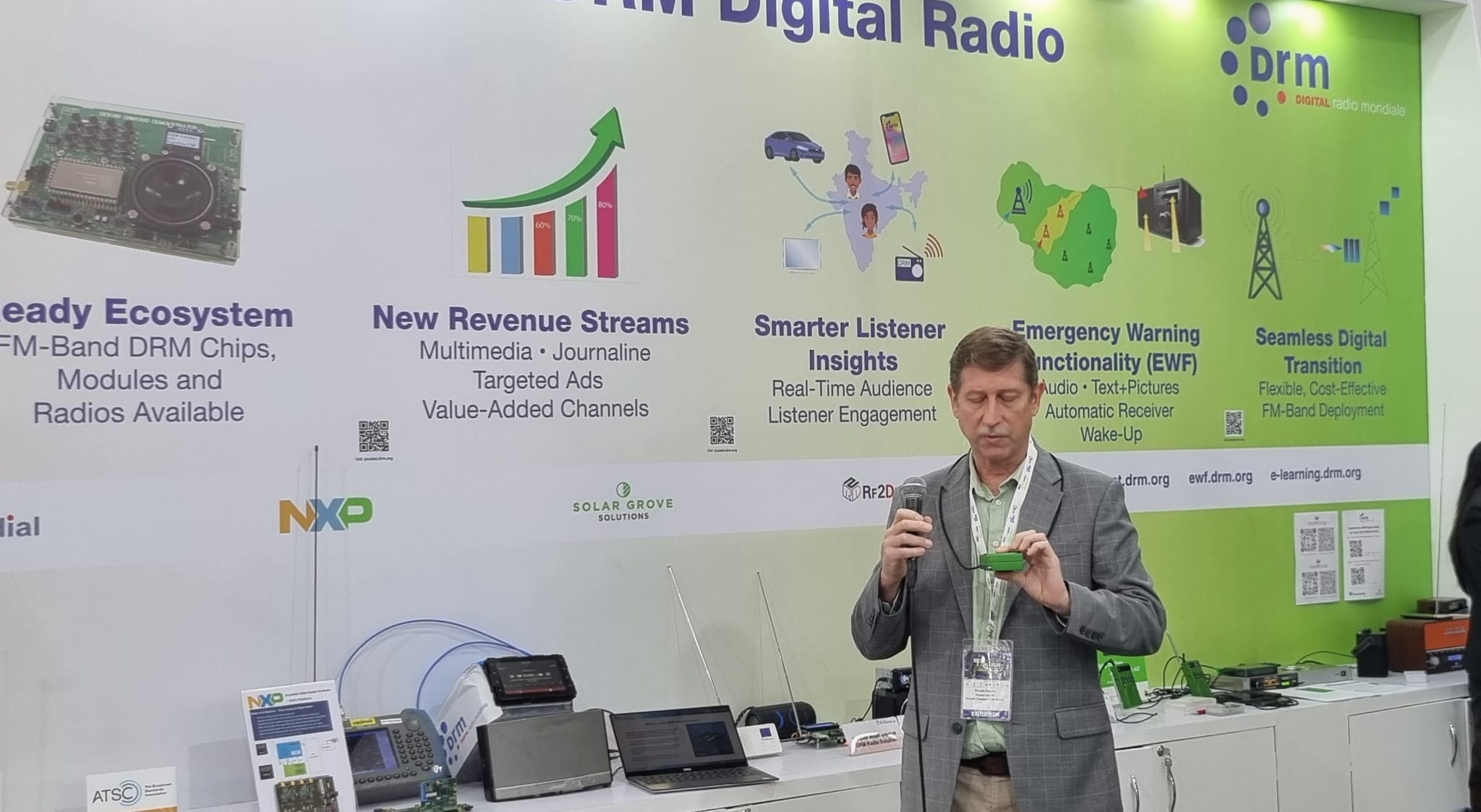
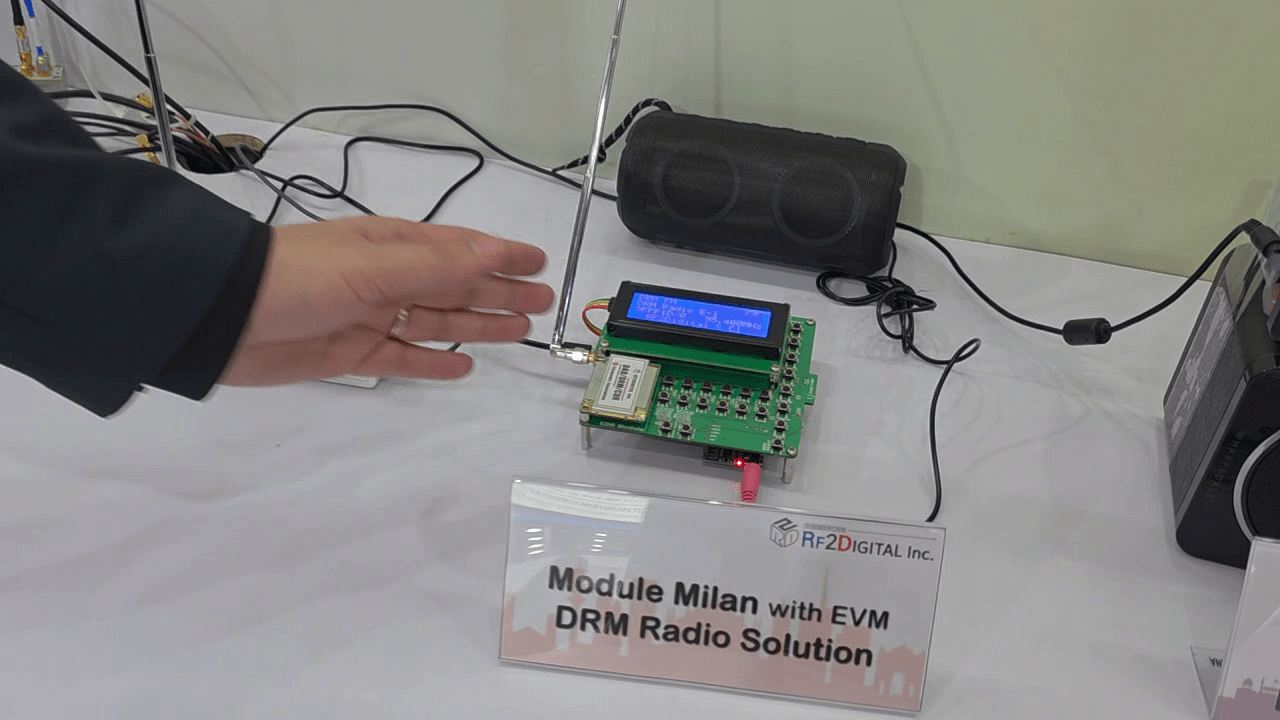
During the BES event, it became evident that the DRM ecosystem continues to expand with receiver chips, modules, SDR options and reference designs – including solutions with India-based innovation, development and manufacturing pathways. CML Micro announced a new low-cost, energy efficient chipset that can power receivers of various types. A CML chipset is already incorporated in the low-cost N88 receiver of Solar Grove Solutions, manufactured in India in cooperation with an Indian company and on display at the DRM booth. It has low-consumption and is soon to be shipped as people sign up for the new multi-band receiver.
The Full DRM Broadcast Chain – From Studio to Listener Showcased at BES
DRM Consortium members and partners could demonstrate at BES 2026 the end-to-end broadcast chain, giving broadcasters, policymakers, and ecosystem partners a hands-on view of what FM digitisation can look like in practice. Visitors could see in action:
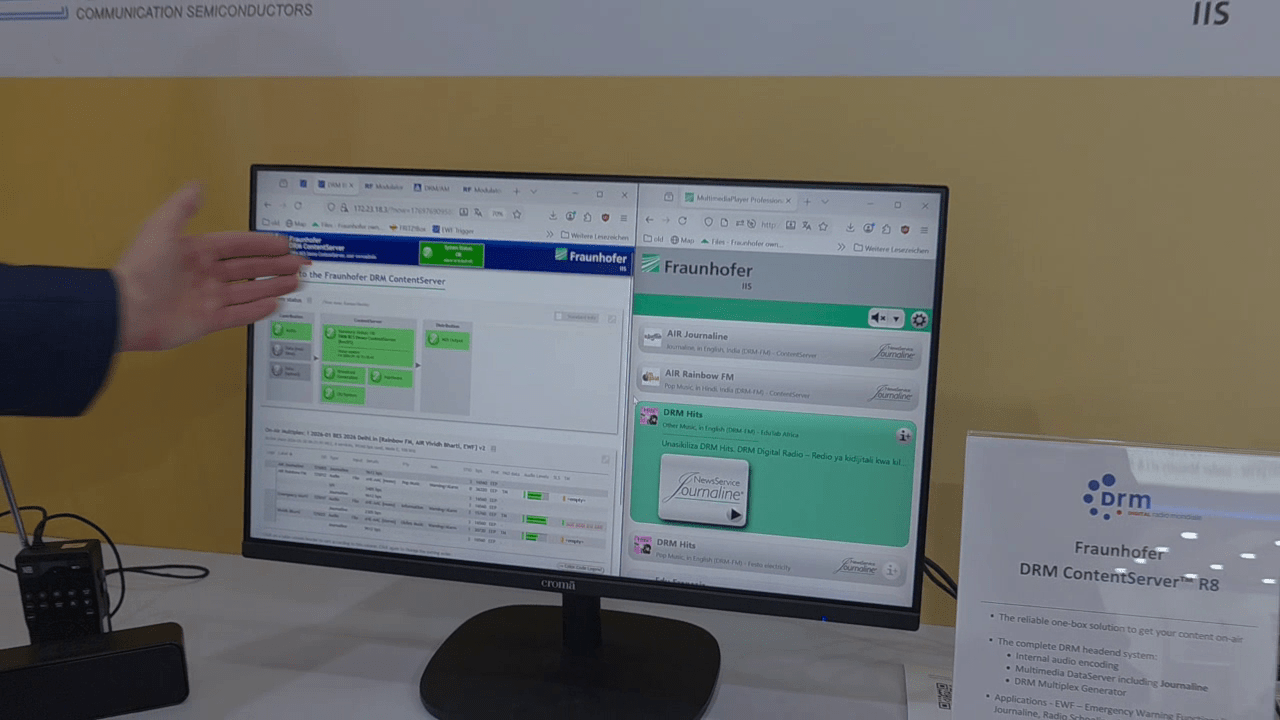
- Fraunhofer IIS presented the new DRM ContentServer R8 technology – a studio head-end solution that combines audio encoding, data service management, and multiplex generation; its new R8 release introducing live multiplex monitoring and a newly implemented and greatly improved Journaline content interface.
- RFmondial DRM modulator – showcasing simulcasting as well as multichannel DRM
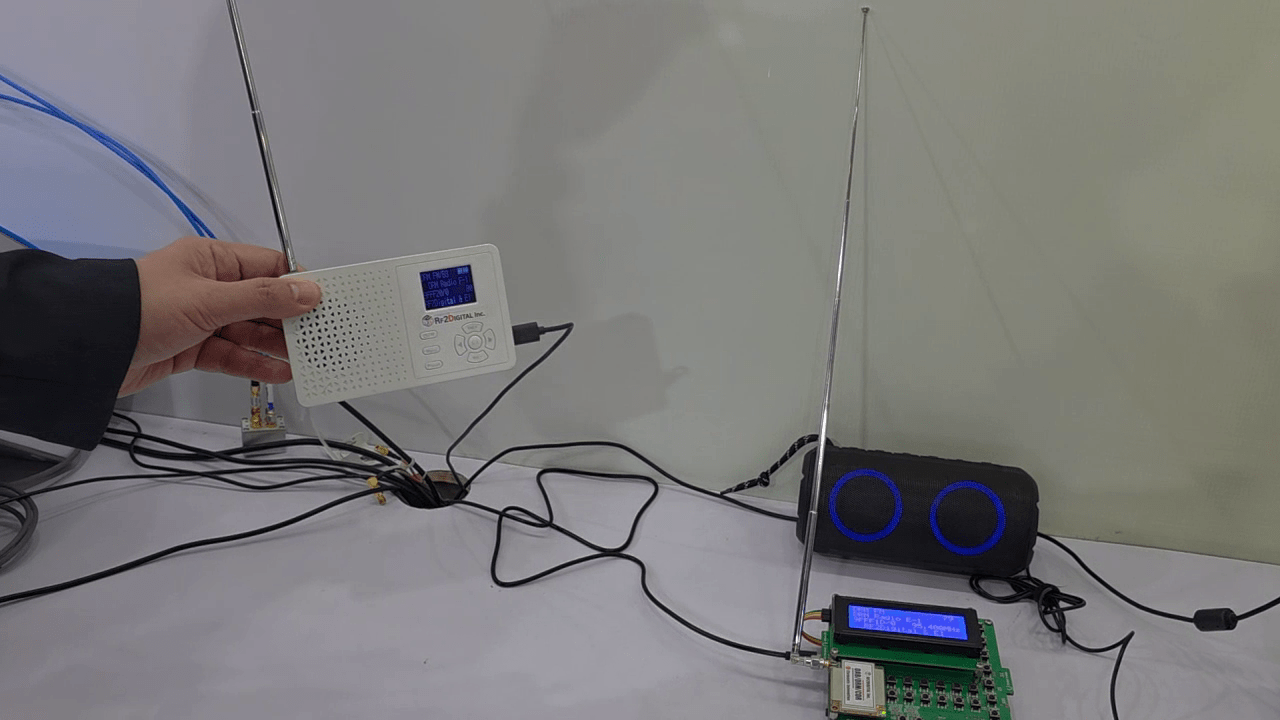
- Receiver and platform ecosystem presentations – from DRM-capable receiver chips and software-defined radio (SDR) solutions to complete consumer and automotive DRM receivers, featuring CML Micro, Fraunhofer IIS, NXP, Inntot, RF2Digital, and other ecosystem partners.
- Emergency Warning Functionality (EWF) – an innate DRM capability designed to deliver urgent alerts quickly and reliably, including automatic receiver wake-up and prioritised audio plus multilingual instructions.
- Public-service applications such as distance learning, public information services, and rich on-screen content.
- Audience monitoring and engagement tools that support measurable listener interaction and smarter programming decisions.
- New commercial opportunities through value-added services, interactive features, and premium formats that can help unlock incremental revenue.
For the DRM Chairman, Ruxandra Obreja, the DRM presence at BES
“came at a crucial moment when the fate of FM digitisation in India is in focus. DRM is modern, flexible and open to all to implement. We have shown with clear arguments and products that DRM is made for India, and establishes one standard for one nation with transition options tailored for India’s FM landscape. As an open standard, DRM, not controlled by any single commercial company, is already being used, and an intrinsic part of Indian innovation and manufacturing. Make in India is not just an aspiration but is concretely supported by Indian and global DRM members of the not-for-profit global DRM Consortium that alone can ensure the technological sovereignty of countries like India.”
The BES presence has been supported by the DRM Consortium members CML Micro, Fraunhofer IIS, NXP, OptM, Solar Grove Solutions, RF2Digital, RFmondial and Starwaves.
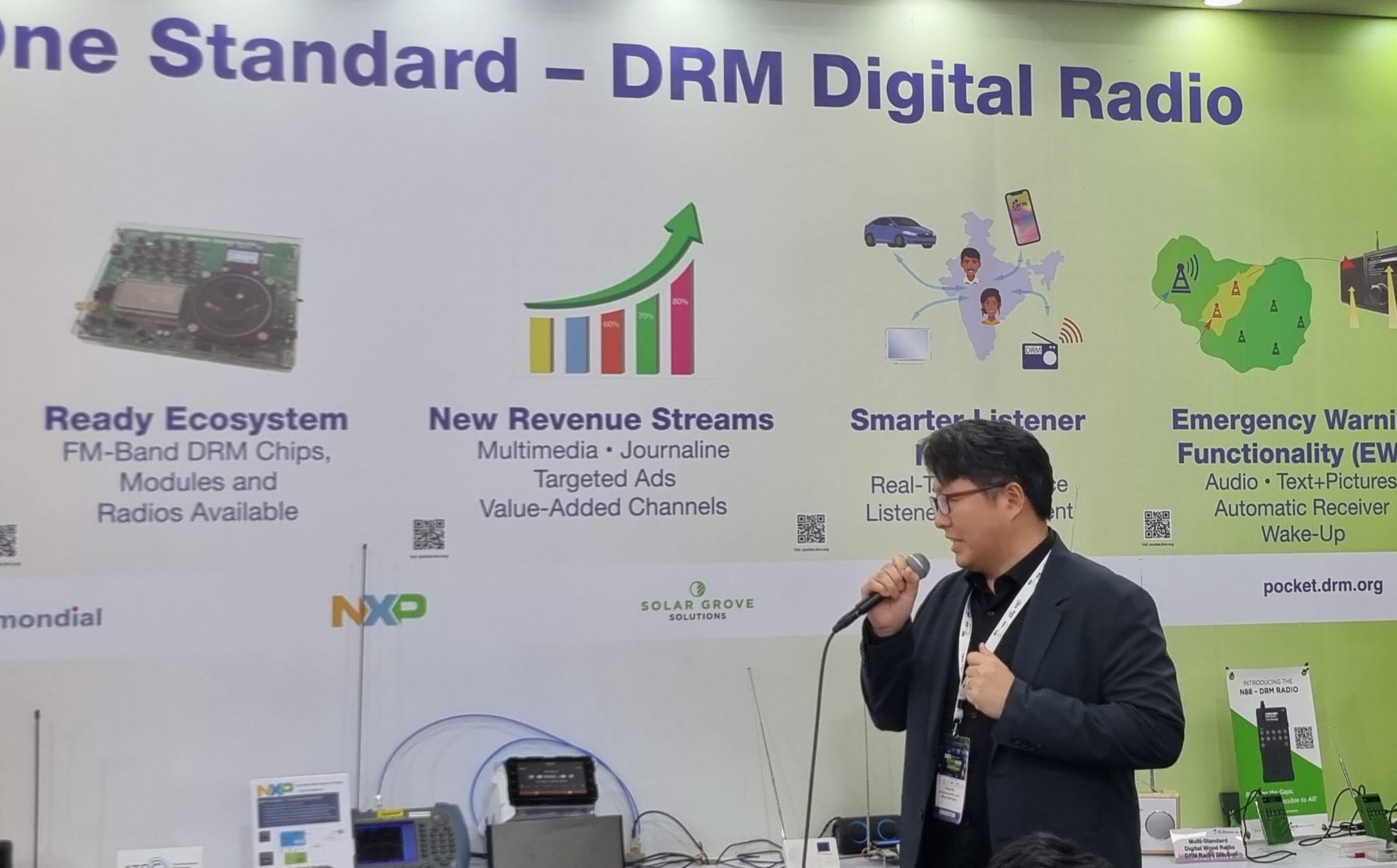
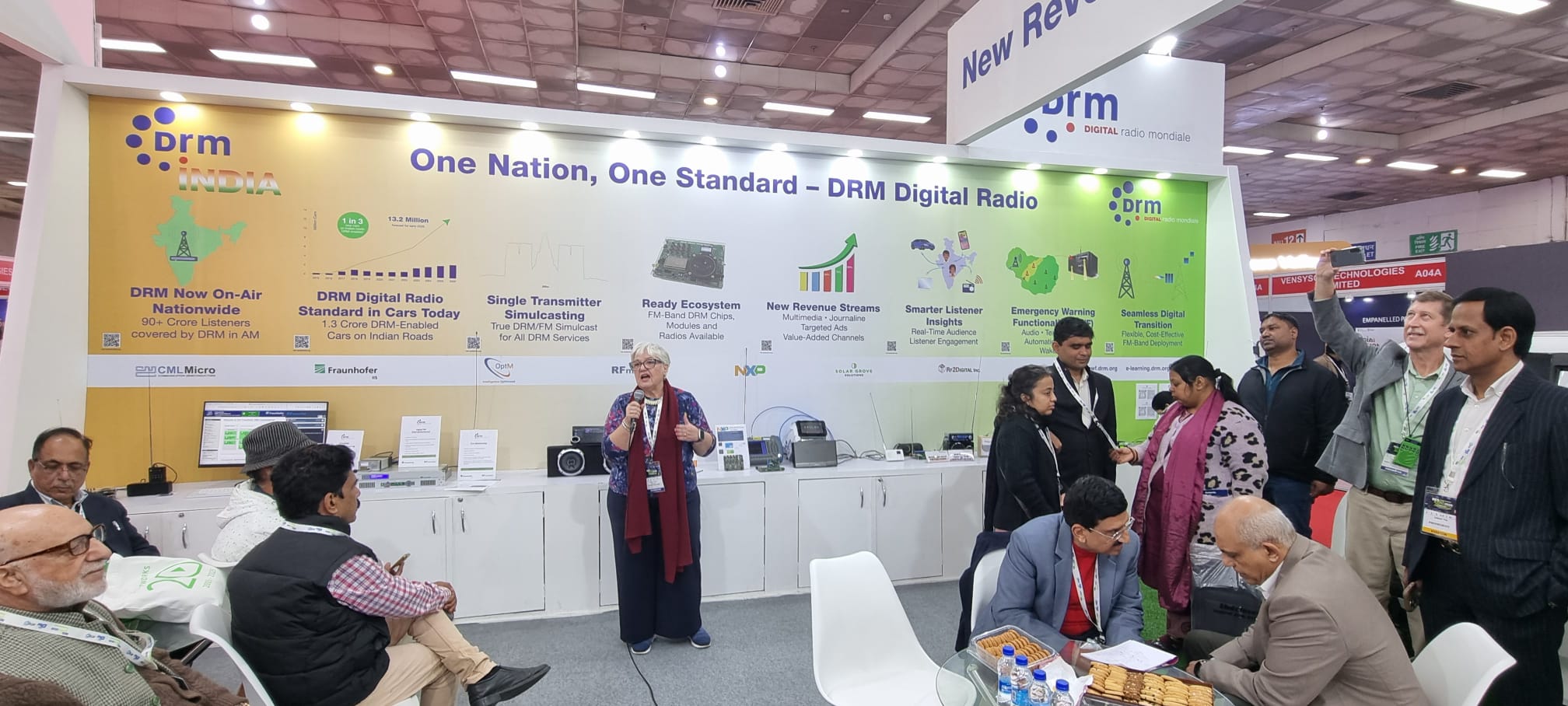
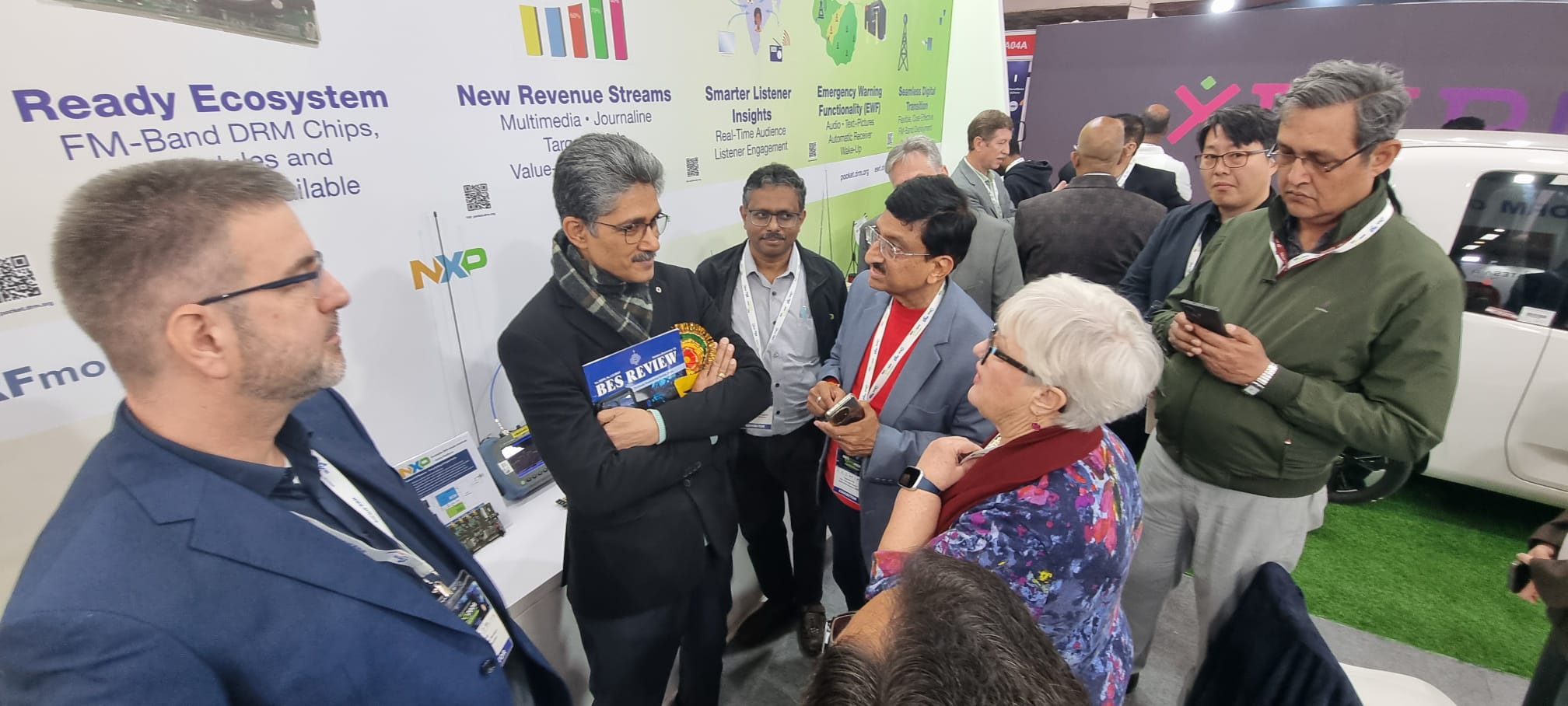
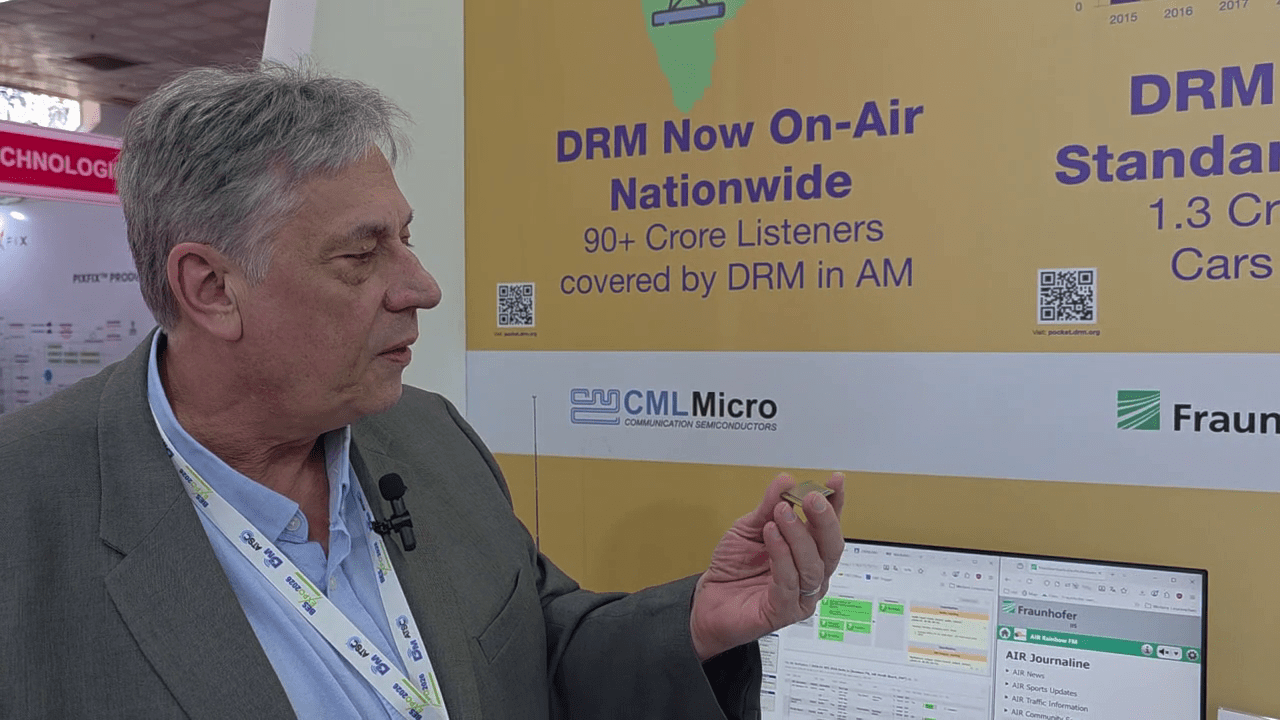
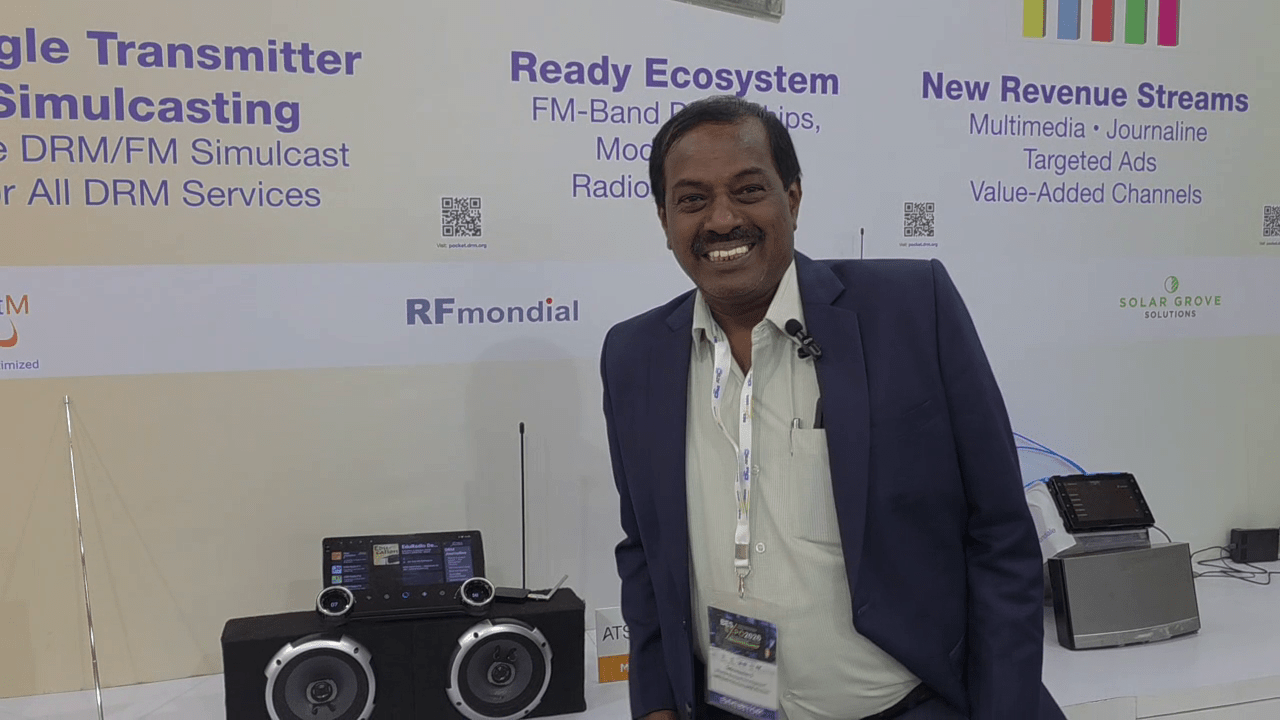
Watch the video to see the DRM Update 2026 featuring the latest developments and highlights from the BES Expo in Delhi.
Watch the video “DRM in the FM Band – A smarter digital future for India’s broadcasters and listeners”:
