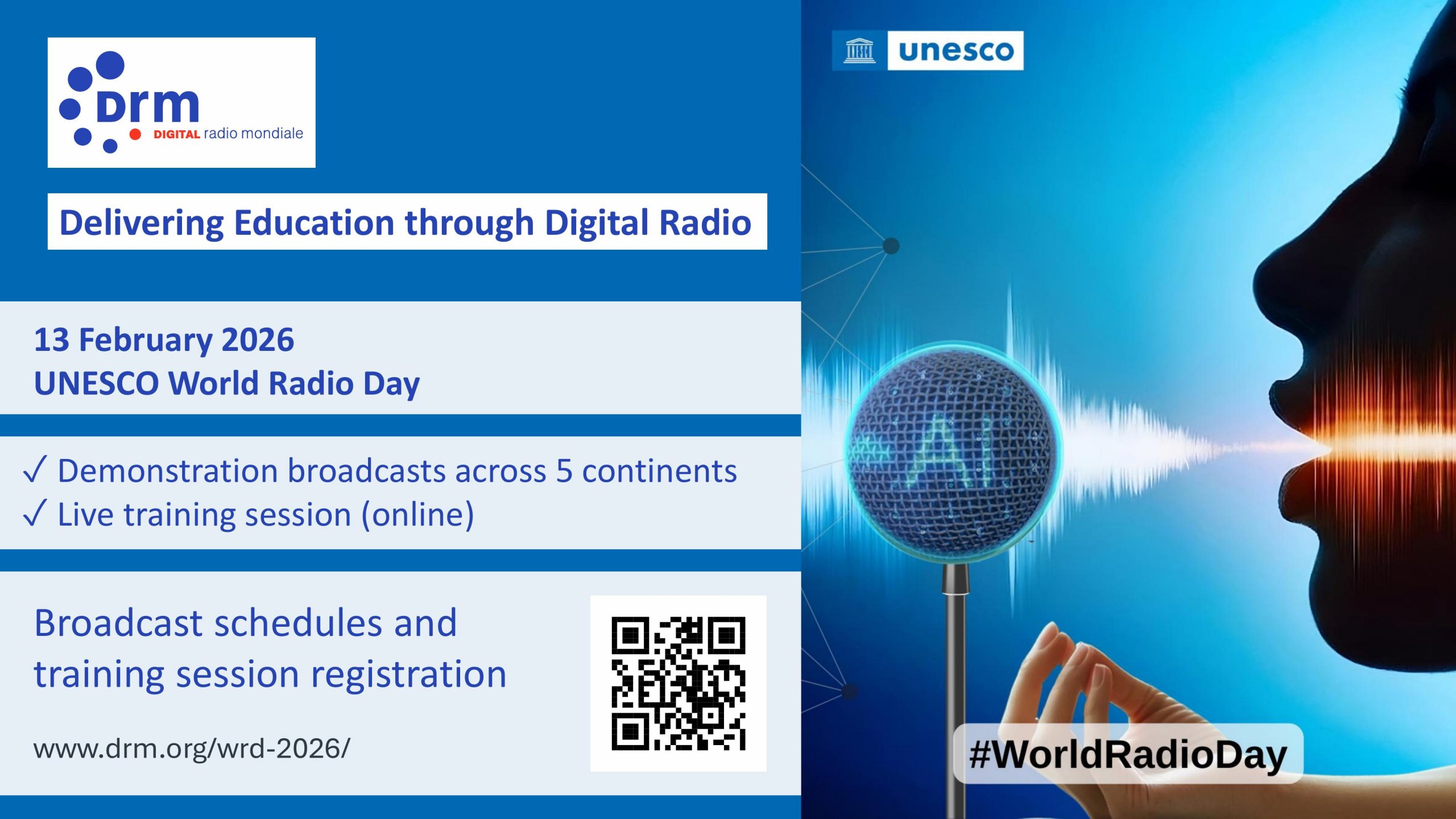
This is our continuously updated page for UNESCO World Radio Day 2026, collecting all information, resources and materials, always available via: www.drm.org/wrd-2026.
Latest Updates
DRM Records Unique Broadcasts, New Launches and AI Demonstration on UNESCO World Radio Day
DRM in FM Demonstration Launched in South Africa on World Radio Day
DRM Concludes UNESCO World Radio Day with Unique Broadcasts, New Launches and AI Demonstration
Digital Radio Mondiale Celebrates UNESCO World Radio Day 2026 with Special Training and Global Broadcasts
Many thanks to our members, supporters, and broadcasters who made this possible: Encompass Digital Media, CML Micro, Fraunhofer IIS, Starwaves, Media Broadcast, Blulemon, Europasender Waldheim, and the DRM South Africa Group.




UNESCO World Radio Day 2026
Proclaimed in 2011 by UNESCO Member States and adopted by the United Nations General Assembly in 2012, World Radio Day (WRD) is celebrated every February 13. It is a Day to thank broadcasters for the news they deliver, the voices they amplify and the stories they share.
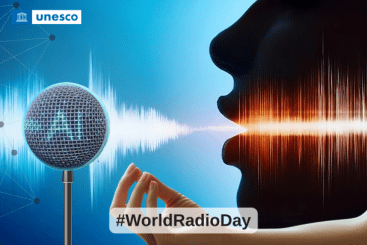
This year UNESCO World Radio Day explores the benefits of AI for broadcasters (unesco.org).
Education via DRM Digital Radio
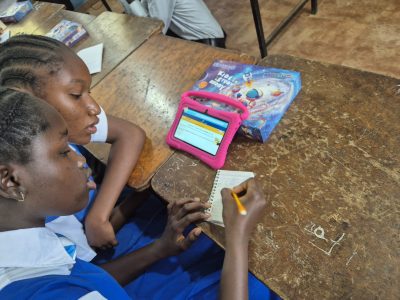
Radio educates. Digital Radio Mondiale (DRM) can help you create virtual classrooms for everyone, everywhere. On UNESCO World Radio Day, discover how DRM digital broadcasts over the airwaves can provide e-learning content – audio, text and images – live or for later use, in one or more languages. Audiences, even in the most remote communities or during emergencies, can receive continuous digital content without the internet. AI can support the creation, translation and tailoring of this e-learning content, including high-quality text-to-speech audio.
Live Training Session: AI-Enabled E-Learning via DRM Digital Radio
How can digital broadcasts over the airwaves provide e-learning content – audio, text and images – live or for later use, in one or more languages?
Join DRM’s live session online via Zoom.
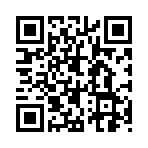
Register via the link or QR code below and select the time slot that best fits your time zone and schedule.
DRM Demonstration Broadcasts on 13 February 2026
On 13 February DRM partners are planning for the first time global demonstration broadcasts to showcase DRM-based educational services across five continents.
| UTC Time | Frequency | Primary Target Region | Transmitter Site | Operator | Notes |
|---|---|---|---|---|---|
| 09:00–15:00 | 6195 kHz | Europe (regional coverage) | Waldheim | Europasender Waldheim | Undirected antenna, low-power regional transmission |
| 12:00–13:00 | 21605 kHz | South-East Asia and parts of Australia and New Zealand | Nauen | Media Broadcast | Directional antenna (73°) |
| 14:00–15:00 | 21600 kHz | Indian subcontinent | Woofferton A901 | Encompass | Directional antenna (82°) |
| 15:00–16:00 | 15260 kHz | Europe | Woofferton A928A | Encompass | Directional antenna (114°) |
| 16:00–17:00 | 21605 kHz | Central and Southern Africa | Nauen | Media Broadcast | Directional antenna (167°) |
| 17:00–18:00 | 15310 kHz | East Africa | Nauen | Media Broadcast | Directional antenna (150°) |
| 19:00–20:00 | 15635 kHz | Eastern Gulf of Guinea | Woofferton A912 | Encompass | Directional antenna (170°) |
| 20:00–21:00 | 17570 kHz | Brazil and parts of Latin America | Ascension A21 | Encompass | Directional antenna (265°) |
| All day | 91.25 MHz | Johannesburg and Randburg area | North cliff, Randburg, Johannesburg | Blulemon | Local FM band transmission, 70W, non-directional |
Our thanks go to our broadcast partners who are carrying these transmissions: Encompass, Media Broadcast, Europasender Waldheim, and Blulemon.
How E-Learning via DRM Works
DRM is a modern digital broadcast standard that carries audio and structured multimedia content, including Journaline-based text services with images, across potentially long distances using existing radio transmission infrastructure. A single transmission can reach many learners at once, while low-power DRM receivers convert the signal into a local Wi-Fi hotspot so that inexpensive tablets, laptops or phones can access lessons without relying on the internet. Educational content can be delivered live and also stored locally for on-demand use, allowing learning to continue even when connectivity is intermittent or unavailable. Teaching experts, specialised agencies, education authorities and specialised e-learning or EdTech providers develop and adapt the content, while broadcasters focus on reliable delivery using DRM. This flexible approach supports a wide range of learning scenarios – from distributing supporting materials to schools, to bridging periods without internet access, and to combining in-person teaching with remote learning delivered by radio.
Videos and Demos: DRM in Action for E-Learning and Distance Learning
Explore videos and interactive demos showcasing practical DRM applications for e-learning and distance learning, including examples of how AI-generated or AI-assisted content can be presented and used in DRM-based learning services.

Expected Outcomes of Using DRM Digital Radio for E-Learning
- The adoption of the Digital Radio Mondiale (DRM) standard will open a path for countries to provide universal, equitable and resilient education.
- By broadcasting high-quality digital lessons nationwide without the need for internet, smartphones or stable electricity, DRM will ensure that every child, regardless of geography, income or crisis conditions, receives consistent and high-quality instruction.
- A national DRM system will create a radio classroom that delivers pre-recorded lessons supported by digital textbooks, images and guided activities. This will address chronic teacher shortages and the lack of school buildings so that all learners, even in the most remote areas, receive clear, structured and high-quality instruction even without access to internet. Multilingual content will include minority groups and remote communities and will strengthen national cohesion
- DRM-enabled education will also be highly resilient. Broadcasts will continue during floods, storms, blackouts, pandemics, school closures or mass displacement. Built-in emergency alerts will allow education and safety information to reach learners instantly, supporting learning continuity and community wellbeing.
- Over time, DRM will serve as a reliable digital infrastructure for lessons, assessments, homework support and teacher guidance.
- Governments, donors, and partners should work with the DRM Consortium to offer this scalable, equitable, affordable and sustainable solution for a prosperous future for all.
- Over time, DRM will serve as a reliable digital infrastructure for lessons, assessments, homework support and teacher guidance.
World Radio Day 2026 – DRM Invitation