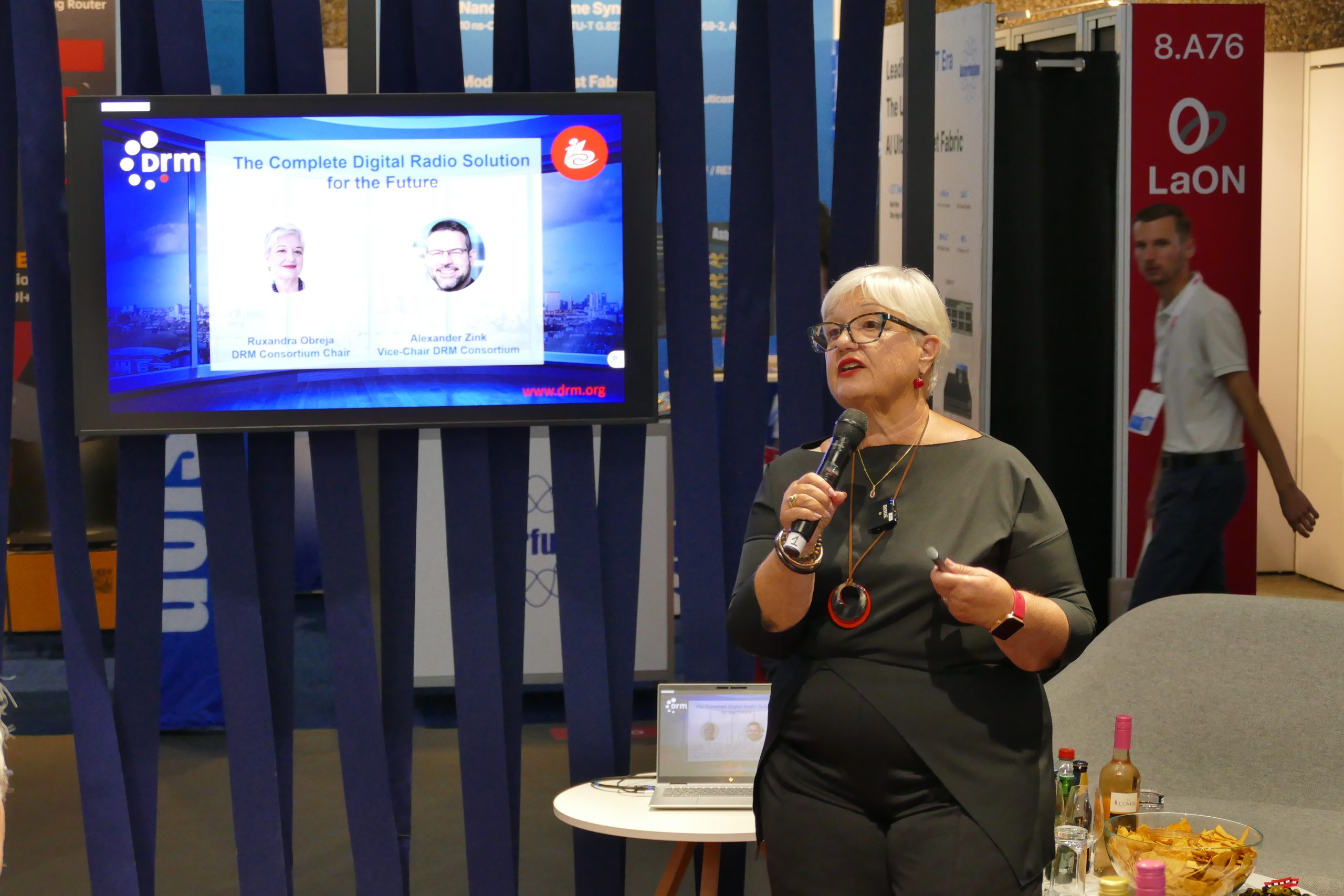
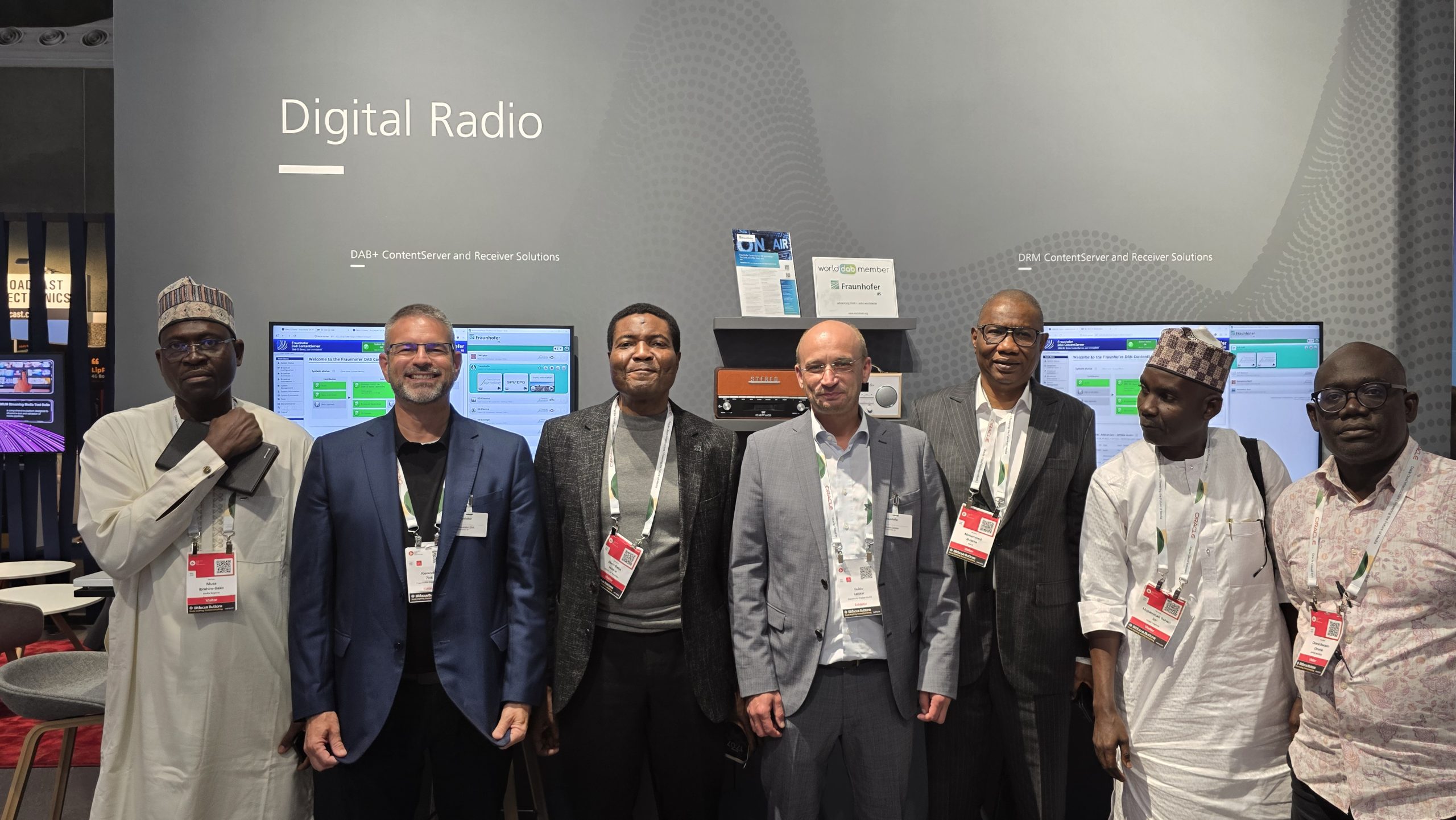
Digital Radio Mondiale Consortium representatives made DRM public updates and announcements during its impactful IBC 2026 events (12th–15th September).
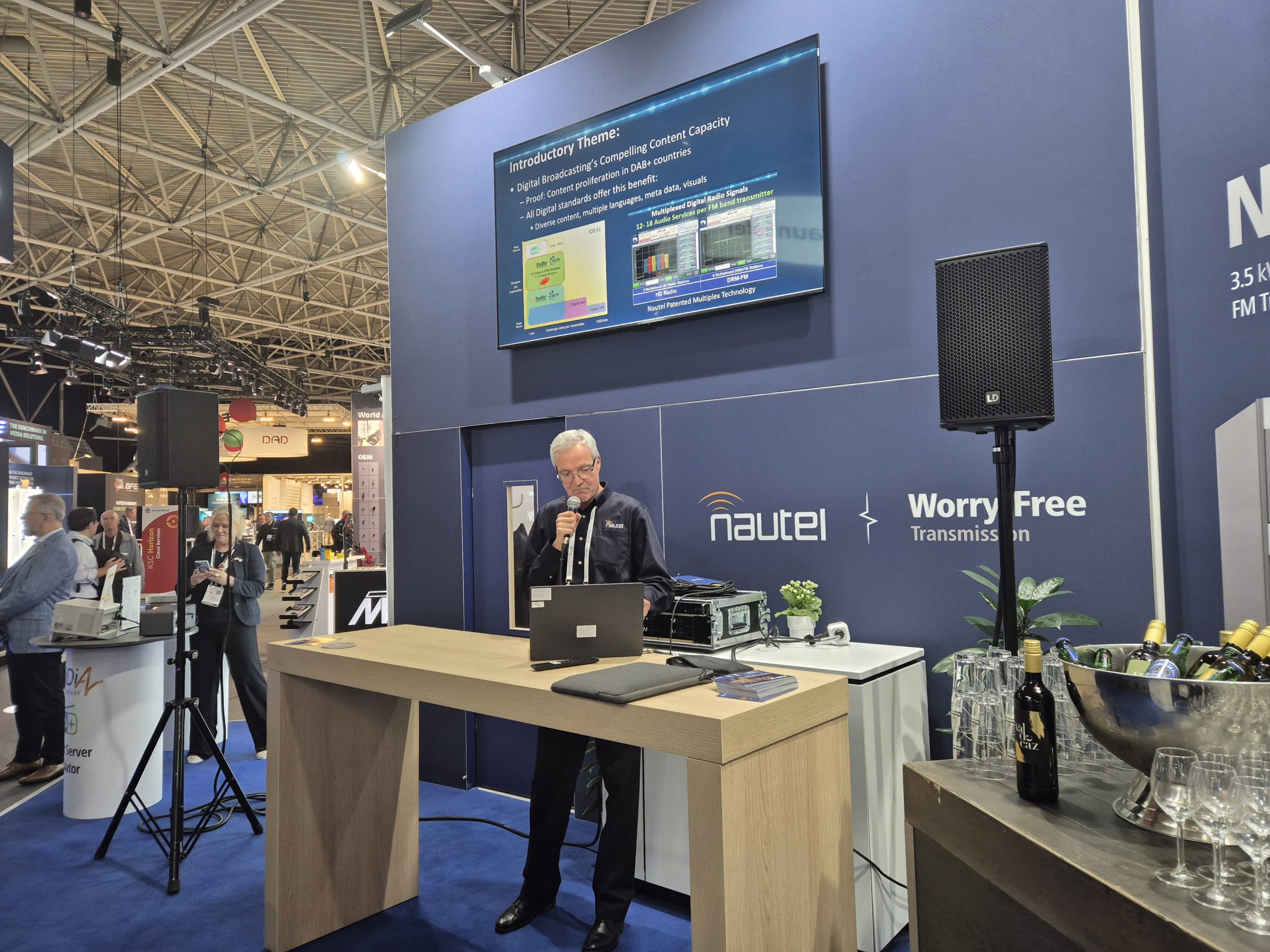
Three events (one virtual event, before the actual IBC, and two live events (at the Fraunhofer IIS and Nautel booths)) focused on the global progress of DRM, the only global, all-frequency bands digital radio standard, new receivers and extra information needed for DRM implementation.
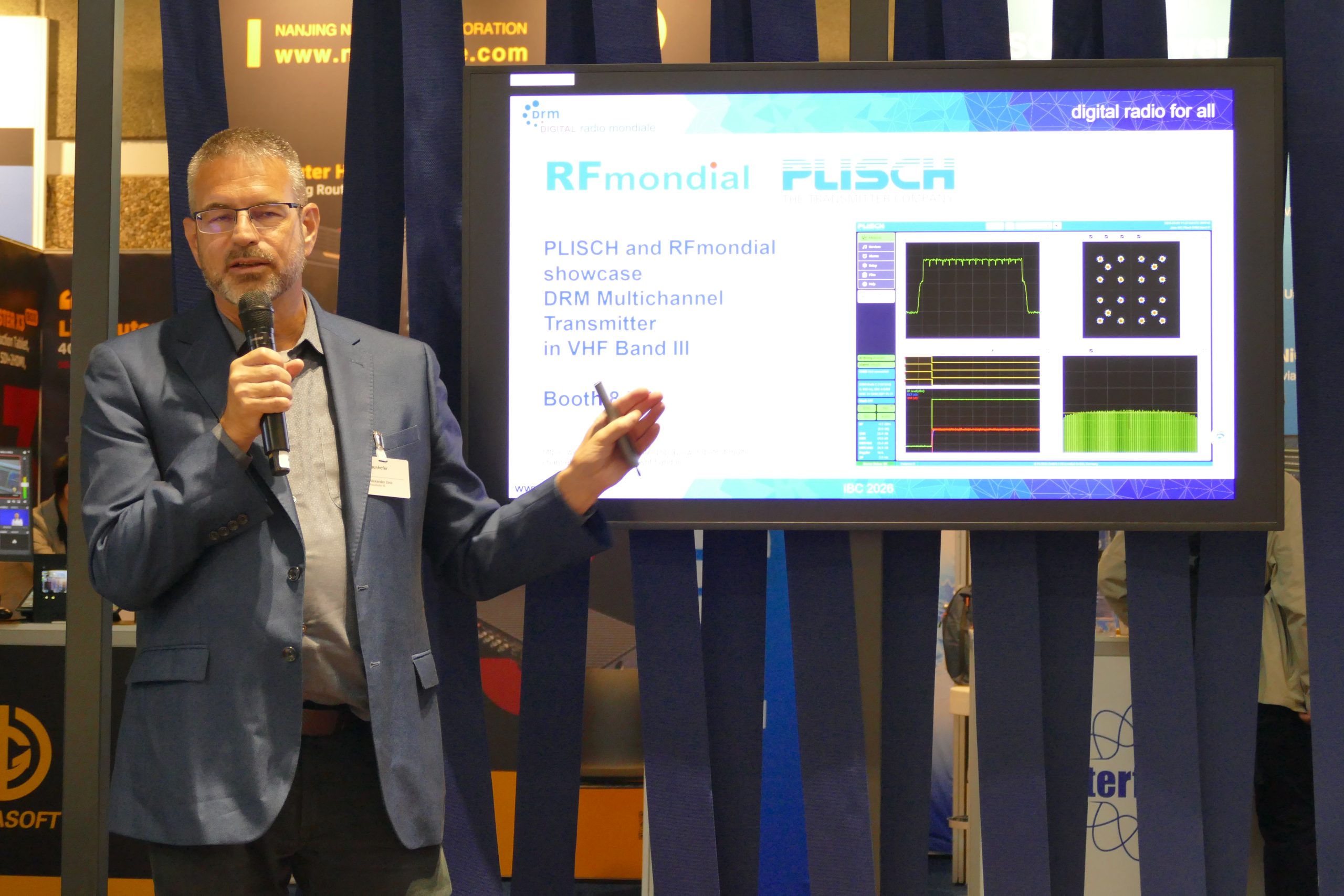
All three events had one theme: DRM – The Complete Digital Radio Solution for the Future. The concrete facts and demonstrations in support of this theme came from some of the key members of the Consortium like CML Micro, Fraunhofer IIS, Elements Innovation, Inntot, OptM, NewGlee, RF2Digital, RFmondial, Skyworks, Starwaves. They presented the image of a modern technology with benefits for all broadcasters and listeners, no matter where they are.
The updates introduced by the DRM specialists at IBC 2026 covered four main areas:
- the launch of new receivers and receiver solutions, many of which support multiple standards,
- the geographic advancement of DRM also fuelled by its special benefits like Emergency Warning Functionality (EWF) and e-learning,
- the technical support for the implementation of the standard and the receiver manufacturing,
- the announcement of the cooperation with UNESCO on a distance learning project.
New DRM Receivers and Receiver Solutions
Based on chipsets and modules launched by companies like CML Micro, NXP, Skyworks, Optm and Inntot, and using an updated user-friendly Fraunhofer IIS ContentServer Technology R8, the variety of car, standalone and mobile/personal devices with DRM introduced at IBC was both robust and innovative.
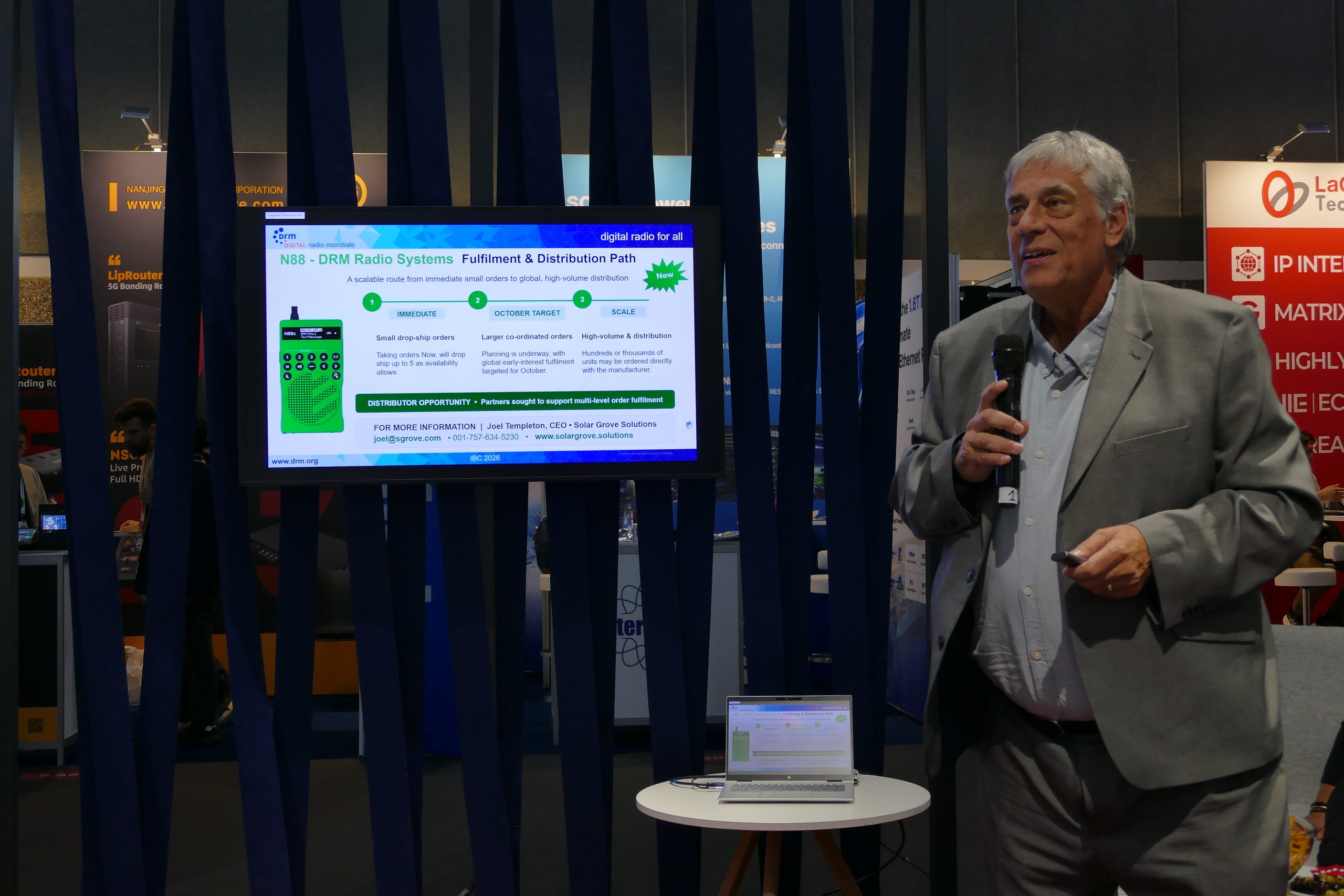
Companies like Solar Grove Solutions together with Alongside Tech, based in the US, have launched a portable receiver – N88 – already getting positive feedback from users.
New Multi-Standard Receivers
These new receivers shown and demonstrated at IBC by DRM were really a new and significant development for the mass take-up of digital radio.
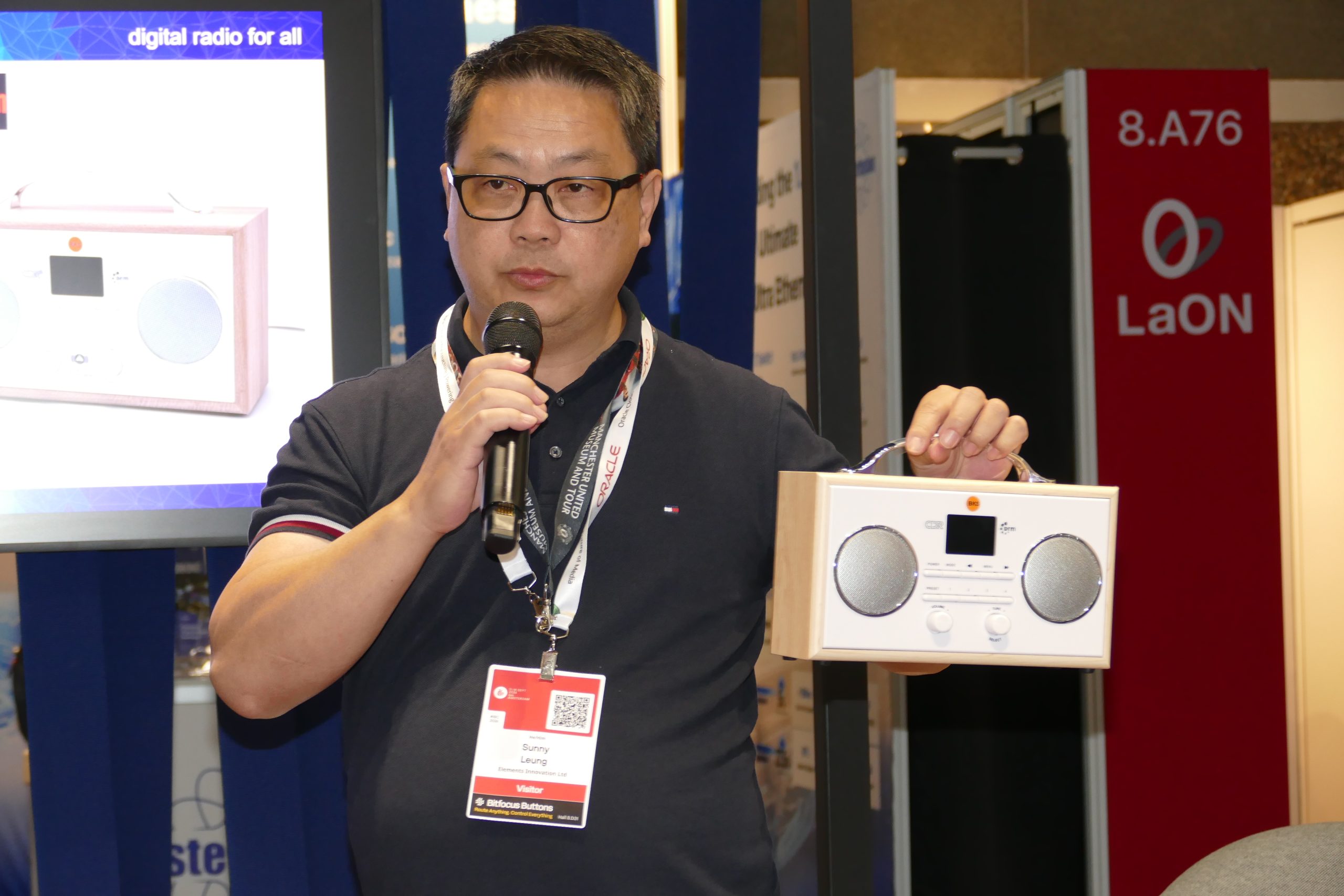
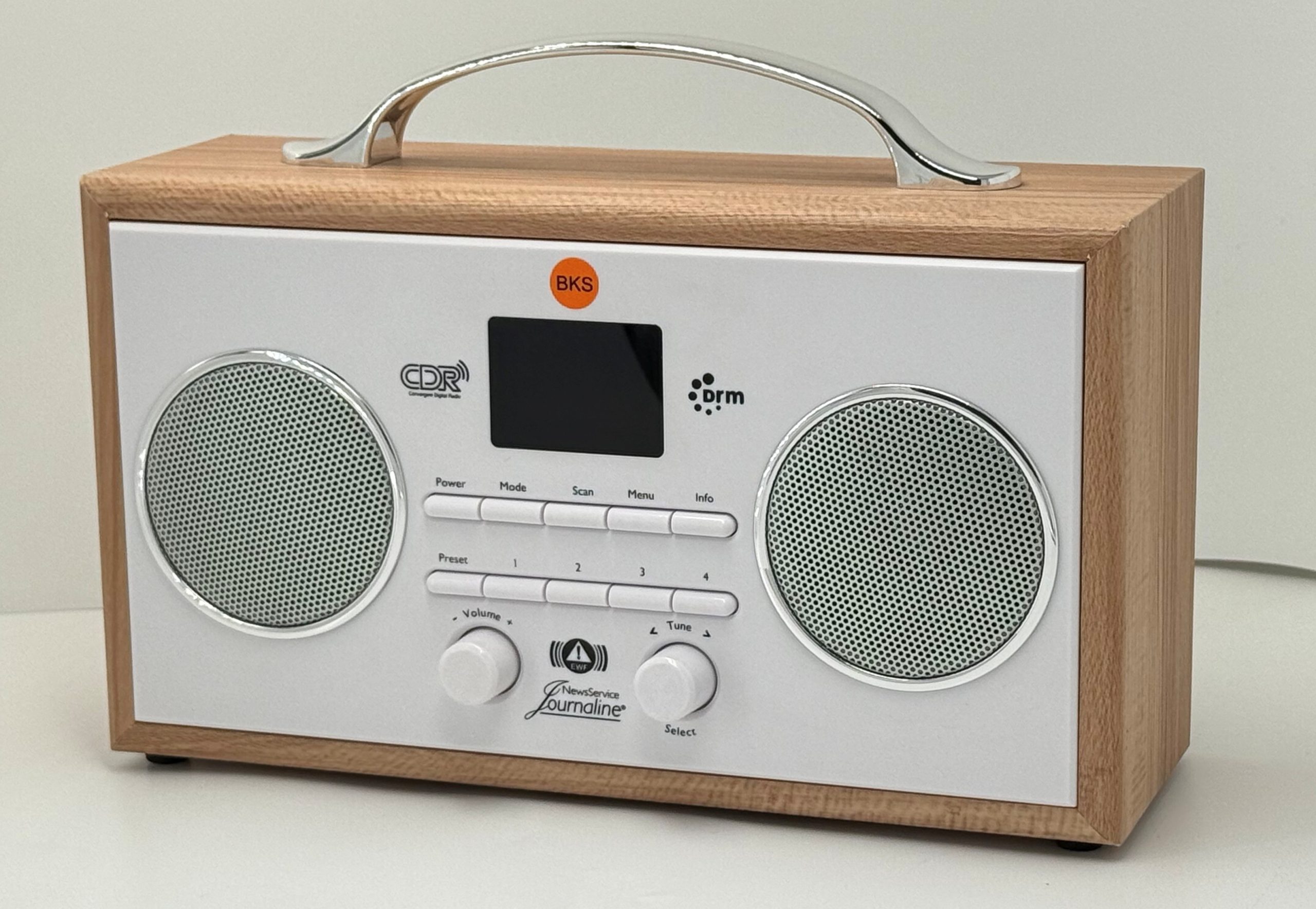
Thus, Elements Innovation (Korea) has launched a dual-standard desktop receiver under the brand name BKS, Model ES006, already with three versions. One version offers reception of broadcasts in both the DRM in the AM bands / CDR / analogue SW/AM/FM / RDS. The CDR standard is aimed at the Chinese market. Another version offers reception of broadcasts with DRM in all frequency bands / DAB+ / analogue SW/AM/FM.
And for the first time, ever, there is also a version with DRM in VHF Band III and DAB+. This receiver version is aimed at countries like Indonesia considering the rollout of both DRM and DAB+.
Starwaves (Switzerland) is also offering a DRM-DAB+ blaster but also a DRM classic receiver with Wi-Fi hotspot covering DRM-AM and DRM-FM as well as DRM Band III /DAB+.
A new SoftRadio App for Android, DRM-DAB+, joins the DRM-only App from Starwaves, and they are all available from established app stores.
A series of versatile multi-standard receivers were also introduced by NewGlee of China.
The software solution offered by Inntot (India) was also introduced as cost effective and high performance, an alternative to digital radio chips powering 2.4 of the about 13.2 million cars with DRM receivers in India.
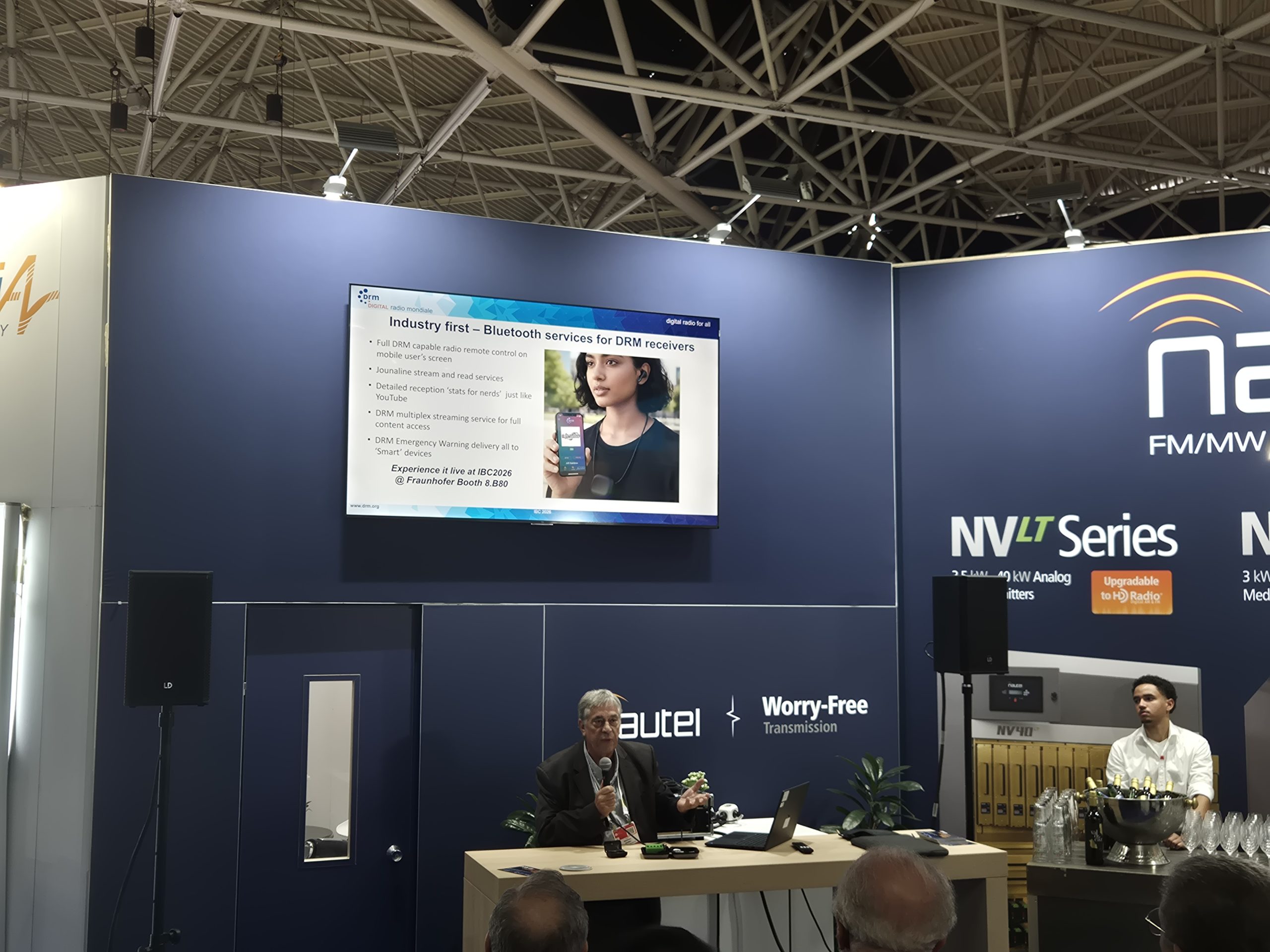
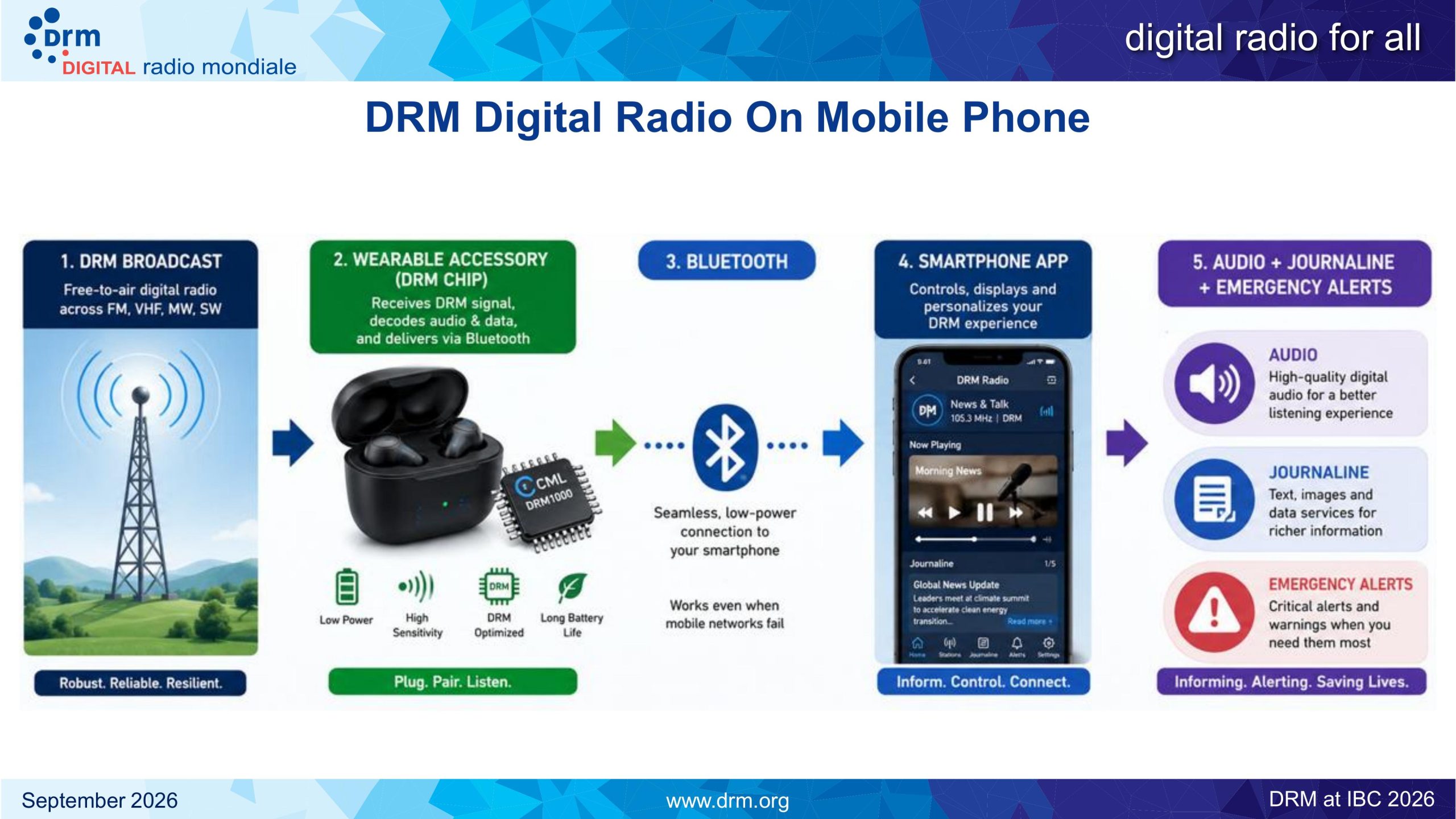
CML Micro took an innovative approach to how listeners can get their preferred audio and multimedia in DRM. “Radio without a radio” is the concept they worked on. CML Micro demonstrated how headphones or earbuds can become receivers while the mobile user’s screen can be used as the remote control of this new radio. This software radio is sophisticated enough to ensure that DRM Emergency Warning is delivered to all “smart” devices, as Journaline and read services are also available in this innovative solution developed by CML Micro.
The demonstration was also on display at the Fraunhofer booth at IBC 2026. It showed how a smartphone connects via Bluetooth to the DRM1000 module, with a companion app making the full range of DRM features, including Journaline, directly available on the smartphone.
For more details on products and solutions for cars, mobiles and standalone receivers please check: products.drm.org.
DRM Becomes Established in the World
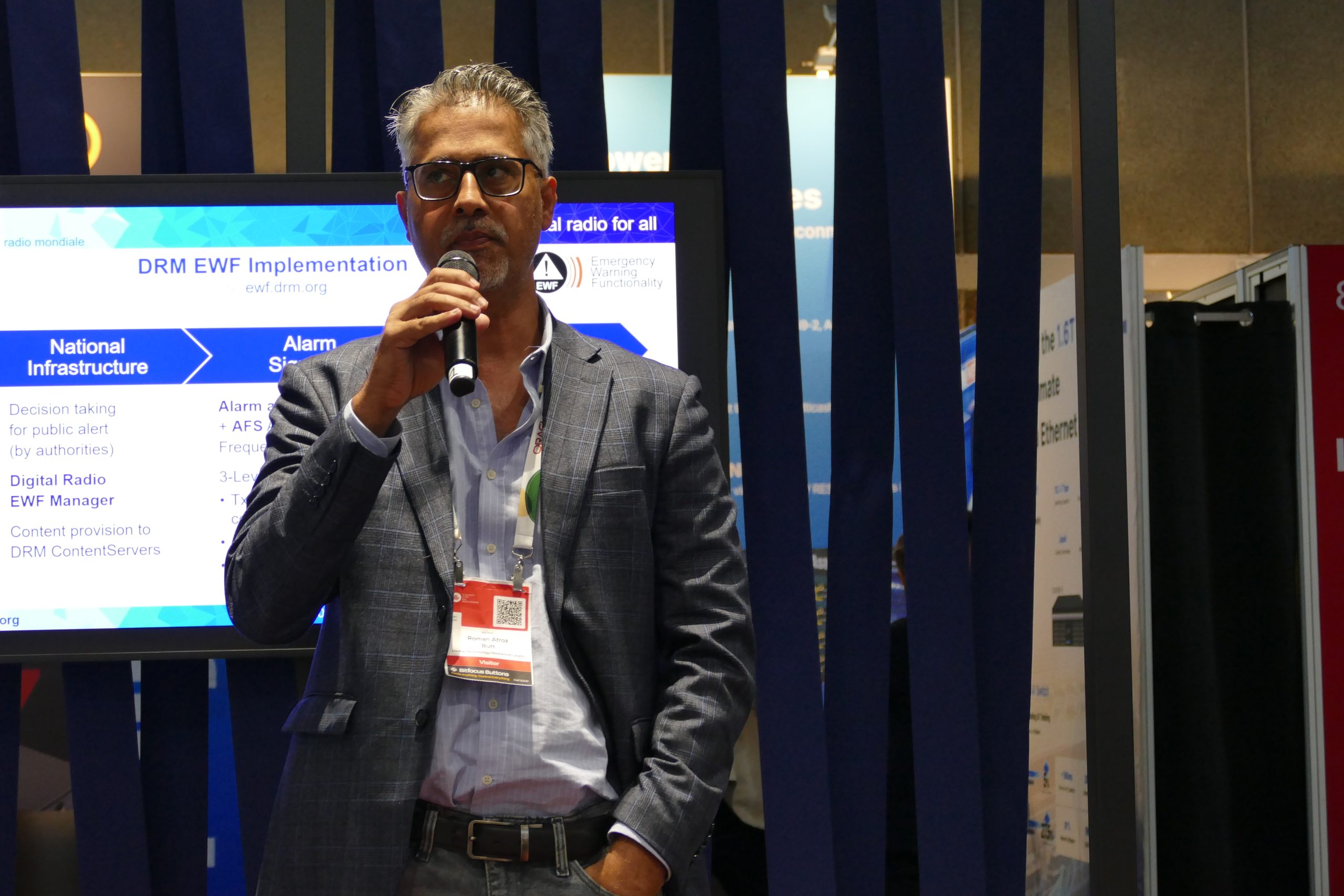
The progress made in countries and regions like Indonesia, China, India, Southern Africa, Pakistan and the interest in the standard that is manifesting in Africa, Latin America and Europe was introduced and then noted with great interest, especially by the participants at the Fraunhofer IIS event on September 12th.
The interest in DRM and the rollout or the plans for its implementation have been stimulated by the distance EWF capability of DRM, now getting particular attention in Indonesia and China.
DRM EWF and E-learning
The success of the e-learning demonstration in Western Africa in 2025 has led to a new project in Southern Africa in cooperation with UNESCO, a project announced during IBC.
New DRM Membership Benefits
Full DRM members will soon be able to enjoy special benefits and services available in a members’ area as announced at IBC. This will be launched very soon and will include:
- the DRM MDI Library – a maintained collection of MDI files,
including on-air recordings and demo content (these files are however not intended to provide verification files or material for exhaustive receiver testing, or to be part of a receiver certification process) - the Fraunhofer DRM xHE-AAC Audio Conformance Library: a set of DRM MDI files to test DRM xHE-AAC decoders
Other technical documents like the DRM Consumer Radio Receiver Functionality Recommendation (rxspec.drm.org) or the new handbook version 6 (handbook.drm.org), already freely available will be all grouped together for easy access to all full DRM members.
Meanwhile the FREE Associate Membership has also been extended.
Conclusion
“We had a very good set of diverse IBC events which projected effectively the image of DRM as ‘the Complete Digital Radio Solution for the Future’,” says DRM Chairman Ruxandra Obreja. “During three exciting events we showed the versatility and wide possibilities of digital radio DRM. The standard is confirmed as global, able to save spectrum and energy, the only broadcast standard offering full-country coverage, as well as key services like emergency warning and distance learning delivery. The DRM IBC highlight was the unveiling of several new DRM receivers and receiver solutions. Some of these are multi-standard receivers available for shipping and also manufacturing locally. DRM members have raised to the challenge of offering transmitters, content servers, exciters, modulators and receivers for all bands so that the regulators and administrators can now confidently recommend and introduce digital, open radio for use in cars, mobiles and in the home. DRM is a standard for these times that leaves nobody behind.”
Company representatives at IBC 2026: Ampegon, BCi Digital, Encompass, CML Micro, Elements Innovation, Fraunhofer IIS, Hedra Tech, Nautel, NewGlee, NXP, RF2Digital, RFmondial, Starwaves and other key Consortium members.
To get the latest on the DRM please check: news.drm.org.